Double, triple, and quadruple Classic Hollywood glamour! A Pictorial

 Double, triple, and quadruple classic Hollywood glamour!


Lucille Ball

Joan Collins

Kay Francis

Carole Lombard

Natalie Wood

Priscilla Lane

George Raft

Alice White 
Robert Alda


Anita Page
Bette Davis


Sylvia Sidney

Betty Grable

Ida Lupino

Joan Crawford

Grace Bradley

🌠International Woman's Day & Star Profile: Ida Lupino

In honor of International Women's Day, let's shine a light on the remarkable Ida Lupino!


Born on February 4, 1914, into a family of actors in showbiz, this London-born actress, producer, screenwriter, and director made her mark in Hollywood in her teens and twenties at Warner Bros.  Despite a bout with polio in late 1934, her strength, determination, and talent propelled her to fame with films such as They Drive By Night (1940), High Sierra (1941), The Sea Wolf (1941), Ladies in Retirement (1941), and The Hard Way (1943).

They Drive by Night (1940) with Humphrey Bogart


Escape Me Never (1947) with Errol Flynn
  
 
Following a heart attack suffered by director Elmer Clifton while filming Not Wanted (1949), co-writer and co-producer Ida Lupino assumed the directing role without taking any credit. The last female director in Hollywood prior to Lupino was Dorothy Arzner, who retired in 1942. In 1948, Lupino and her then-husband Collier Young formed an independent company, The Filmakers Inc. -developing a series of short, low-budget independent films about taboo, social, and personal topics.During the early days of polio treatment in the U.S., "Never Fear" (1949) portrayed the reality of patients. "Outrage" (1950) examined the negative consequences of rape and victim-blaming. "Hard, Fast and Beautiful" (1951) explored the mother-and-daughter relationship. In "The Hitch-Hiker" (1953), the pathology of the American psycho was examined. "The Bigamist" (1953) dealt with bigamy and pregnancy out of wedlock, while "The Trouble With Angels" (1966) explored the challenges of growing up as a woman under rigid Catholic morality.
 
Co-written by and directed by Lupino- Never Fear (1949)

"Ida has more knowledge of camera angles and lenses than any director I've worked with, with the exception of Victor Fleming. She knows how a woman looks on the screen, what light she should have." — cinematographer Archie Stout

Lupino once referred to herself as a "bulldozer" in order to acquire funding for her production firm, yet she referred to herself as "mother" on set. The back of her director's chair was labeled "Mother of Us All" on set.
 
 
Producer-Director Lupino at the center of a parade of her colleagues at her company The Filmakers during production of Hard, Fast and Beautiful (1951)  


Ida Lupino and Robert Ryan in On Dangerous Ground (1951)    
 

In a male-dominated atmosphere, she made an effort to appear nonthreatening. stating, "That's where being a man makes a great deal of difference. I  don't suppose the men particularly care about leaving their wives and children. During the vacation period, the wife can always fly over and be with him. It's difficult for a wife to say to her husband, come sit  on the set and watch."

        
Hard, Fast and Beautiful (1951) Directed by Lupino          

Roadhouse (1948) with Richard Widmark


The Bigamist (1953) with Edmond O'Brien directed by Lupino.  “I got more satisfaction out of directing than acting.  I enjoyed it much more.”   


She was acutely conscious of budget considerations, planning scenes in pre-production to avoid technical mistakes and retakes, shooting in public places to avoid set-rental costs, and reusing sets from other studio productions. Lupino had a sharp eye for casting her actors and a knack for instinctively knowing how to light them.


She continued to act while directing a few more films before switching to television. Directing more than 100 TV episodes between 1949 and 1968, among them, Alfred Hitchcock Presents, Daniel Boone, Bewitched, Batman, Charlie’s Angels, The Donna Reed Show, the pilot episode of Gilligan's Island, 77 Sunset Strip, The Rifleman, Have Gun Will Travel (When Clint Eastwood was shooting Rawhide, he would often take a break to watch the filming of Have Gun Will Travel next door. He admired the way she would ride alongside the cameraman to get the perfect action shots), The Untouchables, The Fugitive and one of the top five best episodes of TV's The Twilight Zone- The Masks in 1963. Her last feature film was the Rosalind Russell, Hayley Mills comedy The Trouble with Angels (1966).
 
Director Ida Lupino and Hayley Mills working on The Trouble With Angels (1966)


Lupino's direction of the 145th episode of The Twilight Zone, entitled 'The Masks', marks her as the sole female director to helm an installment of the iconic series. Lupino has two stars on the Hollywood Walk of Fame for contributions to the fields of television and film. During her 48-year career, she appeared in 59 films and directed 8.Her feature films, The Hitch-Hiker and Outrage, were both added to the National Film Registry in 1998 and 2020, respectively.


Ida Lupino bid goodbye to the film-making business in 1984 and left the Brentwood, California home she shared with soon to be Ex Actor Howard Duff (a frequent co-star) to a smaller residence in Van Nuys. Ida sorrowfully passed away at the age of 77 from a stroke, following her treatments for cancer in Los Angeles, on August 3, 1995.

"I'd love to see more women working as directors and producers. I want to do pictures of poor, bewildered people. Because that’s what we all are.”       

Ida Lupino was so much more than a gifted actress - she was an incredible driving force behind classic cinema. Her prowess for the craft enabled her to create an unprecedented, pioneering directing style, blending narrative components and realism to create something captivating. As a woman in the demanding, sexist Hollywood industry, she started out as an actress before to finding her calling as director. A risk-taker and visionary, Lupino responded to difficult commitments with tight time limits and budgets with a fierce tenacity and power continually taking on ambitious, even daring projects others would find hopeless. Despite her limits, she consistently surpassed expectations and deadlines. Let us take a moment on International Woman's Day to revel in the accomplishments of this astonishing filmmaker - she most certainly deserves it!

“I held my own in the toughest kind of man’s world.”


šŸŽ„ Review: The Hitch-Hiker (1953)

"You wanna be all over that windshield. You haven’t got a chance. You guys are gonna die, that’s all. It’s just a matter of when.” – William Talman in The Hitch-Hiker (1953).
 
A few weeks ago, I finally got around to seeing the riveting film noir- The Hitch-Hiker (1953). Directed by Ida Lupino, it was the first American mainstream film noir directed by a woman. The heat of the Mexican sun and the isolation of a desolate highway form the backdrop for this masterful noir. Roy Collins (Edmond O'Brien) and Gilbert Bowen (Frank Lovejoy) two longtime friends whose lives are consumed by war and marriage, set off on an adventure, looking to reclaim their masculinity. But it all turns out wrong when they run into the crazed and creepy Emmet Myers (William Talman), an ex-con who threatens to shatter their emerging freedom.


Lupino never relaxes the tension for a second, making The Hitchhiker her finest film. Based on Billy Cook's true-life road trip murder spree, this suspense thriller speaks eloquently about the psychological effects of confinement. 


Instead of hiking in Arizona's Chocolate Mountains, they travel to Mexico for a fishing vacation and possibly more. Bowen pretends to be sleeping in order to avoid temptation, whereas Collins appears to be planning a night of drinking and women in Mexicali. Their escape from domesticity, however, places them in a newly constrained role when Myers turns his gun on them, forcing them to submit to his will.


"I'd love to see more women working as directors and producers."  


Ida working with Edmond O'Brien and Frank Lovejoy on the set of The Hitch-Hiker (1953)


On the Set with Edmond O'Brien, William Talman & Director Ida Lupino
 
 
Co-written by Lupino, her former husband Collier Young, and Robert L. Joseph. Based on a story by blacklisted Out of the Past screenwriter Daniel Mainwaring. I highly recommend you check it out! 


šŸ‘‹šŸ¼ Welcome March!

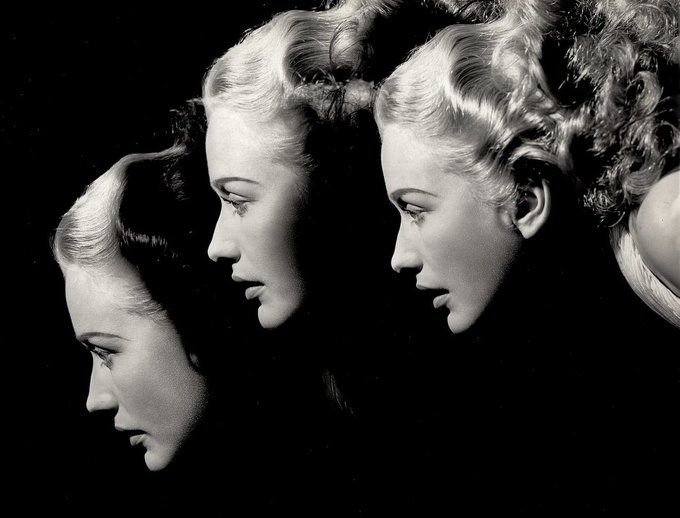
This Month’s Posts are being brought to you by two Ann Sheridans for Wrigley’s doublemint gum.


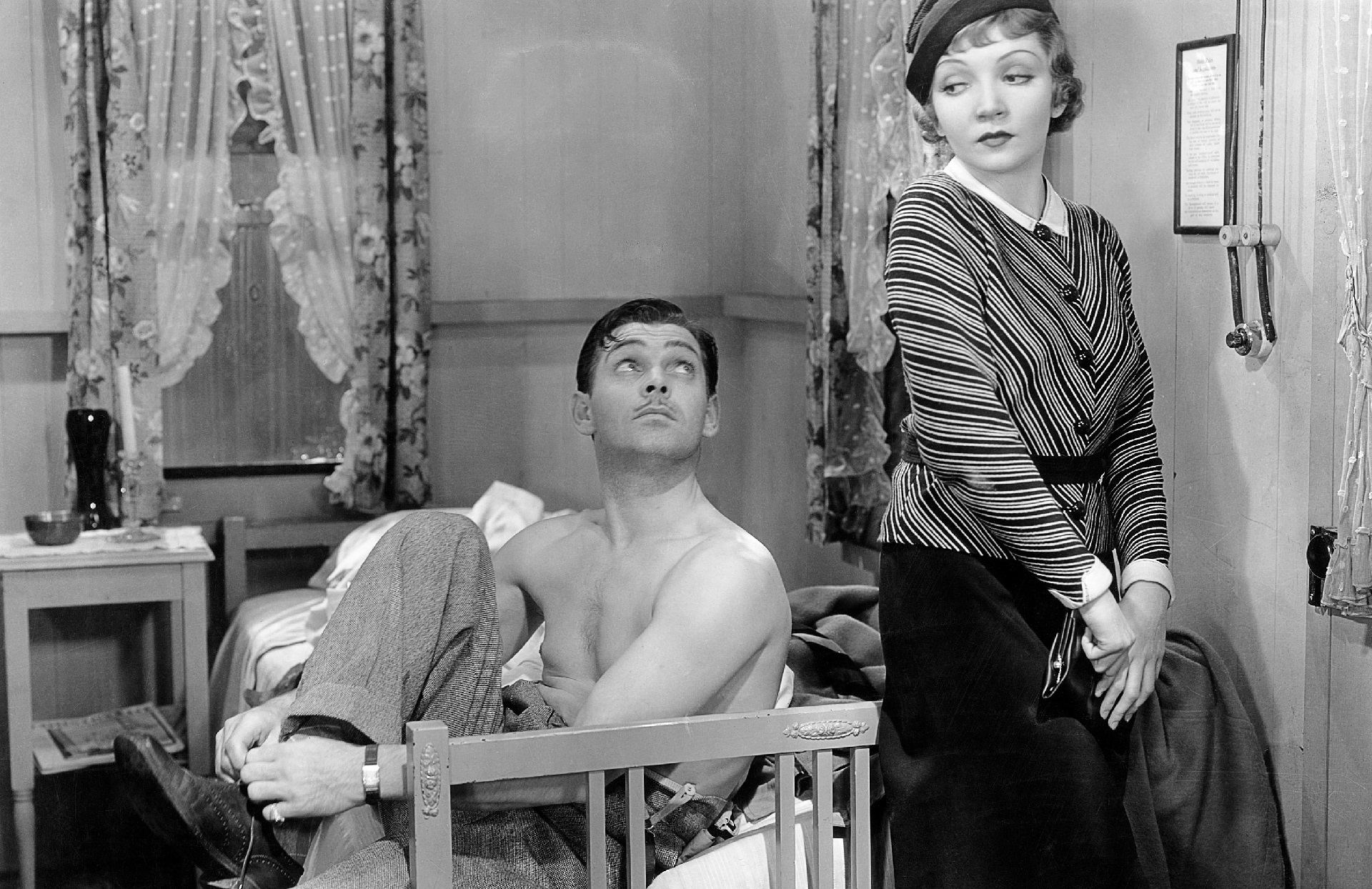
šŸŽ„ Review: It Happened One Night (1934)

“Take me to your island.  I want to do all those things you talked about. . . .  I love you.  Nothing else matters.”

The forerunner, the grandparent of screwball comedies It Happened One Night opened at New York's Radio City Music Hall on this day February 22, 1934!

The charming pre-code film, directed by Frank Capra, with a screenplay by Robert Riskin, starring Clark Gable and Claudette Colbert, soared on to become 1934's most notable success.

Based on a story by Samuel Hopkins Adams, a headstrong heiress (Ellie) finds herself on a road trip of discovery with an unemployed cynical newspaper reporter (Peter). A runaway bride, he offers to help her reunite with her soon-to-be husband in exchange for an exclusive story, leading to an unexpected romance.  Due to the 1930 Hays Code being in force while the film was shot, its implied sexual content was primarily expressed with witty banter and innuendo.


The film focuses on traditional gender roles and the Great Depression. The ignorance that Ellie has of lower-class struggles highlights the difficulties they face. Coming from different economic worlds, their characters have very different experiences and understandings of the world. Their love for each other transforms them, providing a renewed spirit and the possibility that social divisions can be bridged.


On loan from MGM, Gable didn't bother to read the script. He arrived on the first day of shooting drunk and just wanted "it over with". Capra reprimanded him and he was cooperative and sober for the rest of the shoot. After not getting along with Capra in an earlier film For the Love of Mike (1927), Colbert accepted the part for double the salary, and a quick filming schedule so she could leave on vacation. Despite their shared could not care attitude, dissatisfaction with the script, and Colbert giving Capra a hard time, the film is perfection. Since both spend the majority of their screen time together, they needed to exude chemistry from the get-go. And they sure did! They give the film a relaxed quality that's light, funny, and refreshing to watch. The studio didn't have faith in the film so they barely promoted it. But after word of mouth and expanding through the States, Columbia earned over $2.5 million back on its $325,000 budget and another two million in theatrical rentals. It was the first film to win Academy Awards for Best Picture, Director, Actor, Actress, and Screenplay.


 On the Set with Gable, Colbert & Director Frank Capra

On The Set with Colbert, Gable and Capr


Did you know this was Bugs Bunny's creator Friz Freleng's favorite film and he based Bugs on Gable's mannerisms of eating carrots and talking quickly at the same time?


There was going to be a stunt double used for Colbert since it was immodest to show her leg. When she saw the stunt double, she said, "That's not what my leg looks like!" and insisted on using her leg.


Actresses considered for the lead role were Myrna Loy who hated the script and said "Claudette had the legs for it”. Loretta Young was suggested but Capra said No. Miriam Hopkins, who supposedly called it “just a silly comedy.” Sorry, Bette Davis, Warner Bros. won't lend you out. Carole Lombard wasn't available. Constance Bennett and Margaret Sullavan also said No. Eventually, Columbia's Harry Cohn suggested Colbert. 1934 was a great year for Colbert, appearing in two of the year's highest-grossing films Cleopatra and It Happened One Night.


Legend has it, there was a large decrease in undershirt sales around the country when Gable in the undressing scene had trouble removing his. As a result, some underwear manufacturers tried to sue Columbia.


 Actors considered for the lead actor was Robert Montgomery, who turned it down saying "the script was the worst thing he had ever read". And  Fredric March who also refused the part.


The fine supporting cast includes the likes of Walter Connolly and Roscoe Karns.

Colbert decided not to attend the ceremony since she felt she would not win. She thought it was the "worst picture in the world" and planned to take a cross-country train trip. After she was named the winner, studio chief Harry Cohn sent someone to get her off the train and to take her to the ceremony. Colbert arrived wearing a suit that she had Paramount Pictures costume designer, Travis Banton, make for her trip. Despite the animosity toward Capra, she thanked him in her acceptance speech.

Shirley Temple presents the Best Actress Oscar to actress Claudette Colbert for her role in, "It Happened One Night"
 

Gable gave his Oscar to a child who admired it. The child returned it to the Gable family after Clark's death. On December 15, 1996, Gable's Oscar was auctioned off to Steven Spielberg for $607,500, who donated the statuette to the Motion Picture Academy.


"We made the picture quickly--four weeks. We stumbled through it, we laughed our way through it. And this goes to show you how much luck and timing and being in the right place at the right time means in show business; how sometimes no preparation at all is better than all the preparation in the world, and sometimes you need great preparation, but you can never out-guess this thing called creativity. It happens in the strangest places and under the strangest of circumstances. I didn't care much for the picture, ] it turned out to be 'It Happened One Night'." ---Director Frank Capra


The picture was the first to win the five most esteemed Academy Awards: Best Picture, Best Director, Best Actor, Best Actress, and Best Adapted Screenplay. The film was remade several times: Musicals, Eve Knew Her Apples (1945) and You Can't Run Away from It (1956). And Indian films Chandrodayam 91966), Dil Hai Ke Manta Nahin (1991) and Hudugaata (2007).