Whenever I hear Irving Berlin's song 'Cheek to Cheek,' I can't help but smile because it brings back memories of when I first fell in love with classic films. The movie that truly changed my outlook was 1935's Top Hat, which is celebrating its 90th anniversary today.
As a kid, I enjoyed watching classic
films, from the Universal Monsters like Frankenstein to the occasional
musical on Sunday nights. But it wasn't until I faced a tough time in my
life that I truly began to appreciate film. Before I discovered the
American Movie Classics channel and TCM, my weekend movie nights were
thanks to WNET Thirteen, New York City's PBS station. It was there, in
the early 1990s, when I was about 16, that I stumbled upon the PBS
series The Musicals, hosted by Jane Powell.
That first night, I
was watching a Fred Astaire documentary called The Fred Astaire Songbook
(1991), hosted by Audrey Hepburn. After that, Jane showcased his
musicals with Ginger Rogers, and the first one I watched was Top Hat.As the night went on, with four films in total, I found myself wishing I could be Ginger, dancing alongside Fred on those beautiful Art Deco sets and humming the incredible songs written by Irving Berlin, Cole Porter, Ira & George Gershwin, Jerome Kern, and Dorothy Fields. I don't recall the exact moment it clicked for me, but I felt as though I was experiencing something truly special and new.
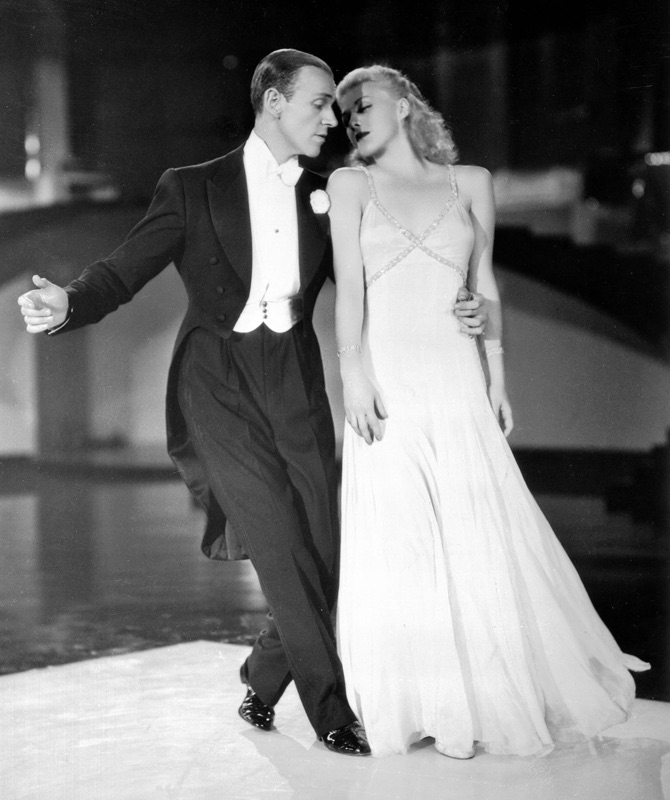
What an incredible film! It was the first time I truly felt like I was transported back to that era, as if I were right there, living in the moment. Seeing Fred in his classic Top Hat, White Tie, and Tails alongside Ginger’s dazzling and elegant dresses took my breath away. A wave of warmth and comfort washed over me, and I couldn't help but smile, both inside and out. Watching them dance together is genuinely one of the most delightful experiences I've ever had.


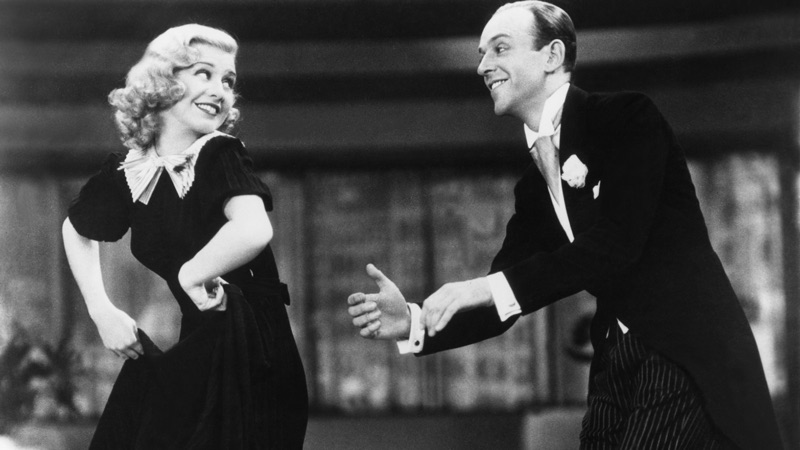
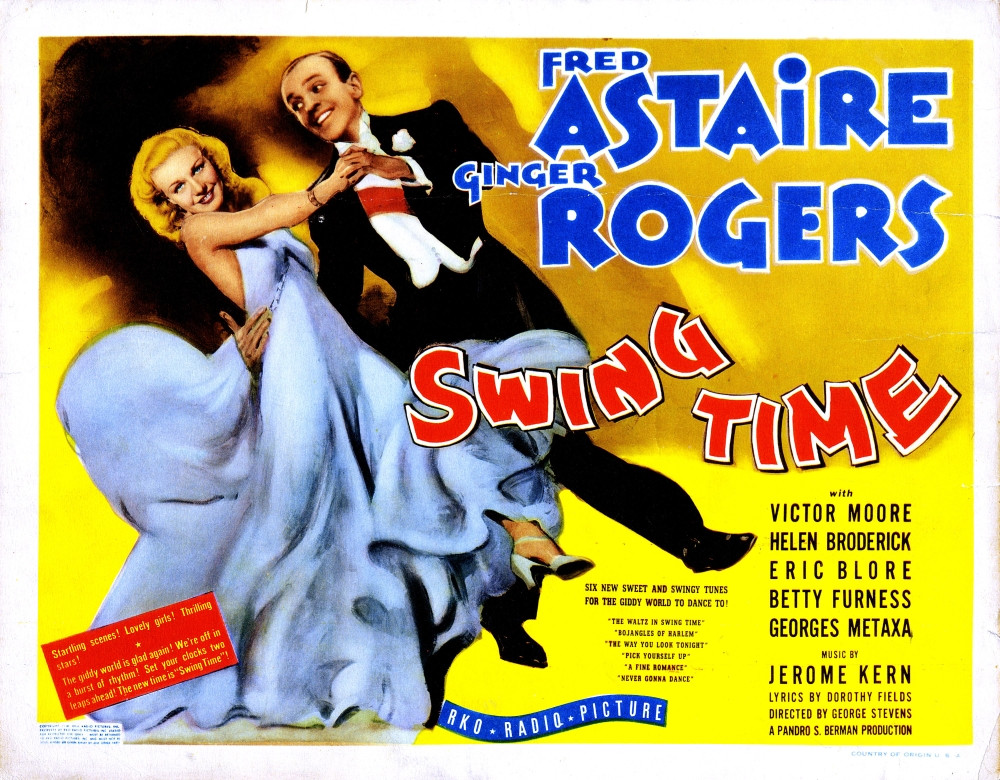
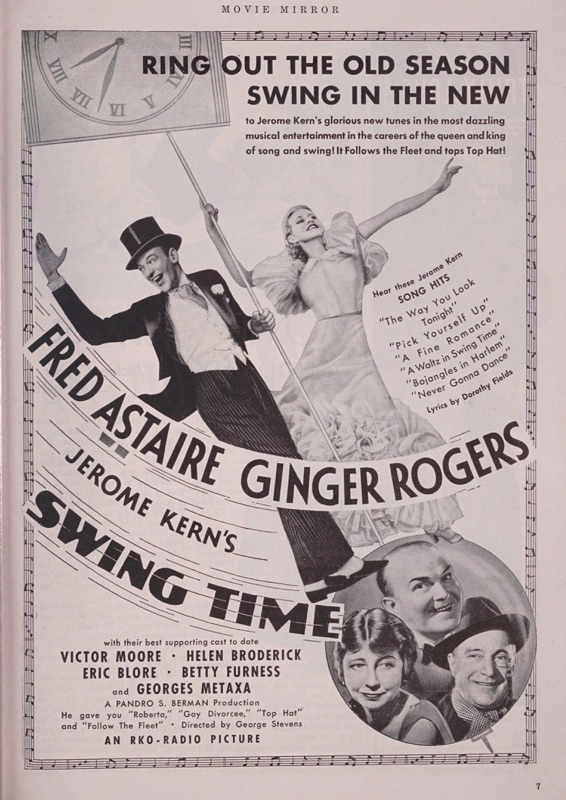
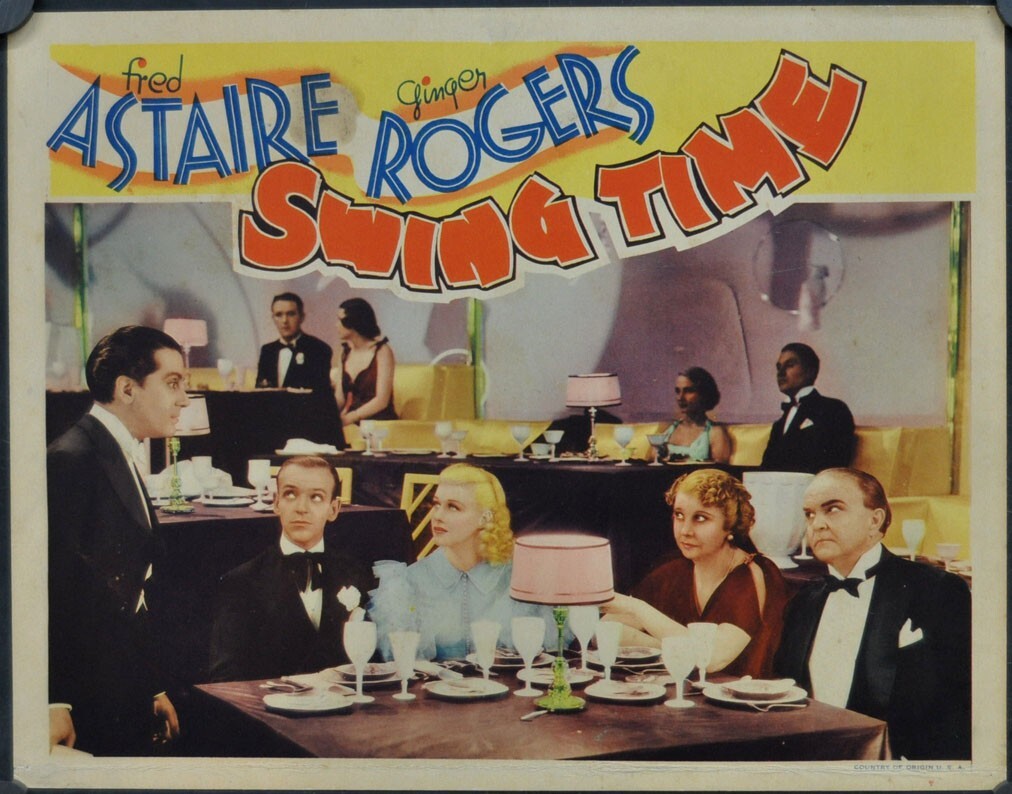
Top Hat (1935) is often considered the pinnacle of the musical partnership between Fred Astaire and Ginger Rogers, with only Swing Time (1936) coming close. It stands out as the most beloved and successful of their ten films together, cementing their legacy as one of cinema's most iconic pairs. It achieved remarkable success, garnering four Academy Award nominations, including Best Picture. It became one of the decade's most profitable films and was RKO Pictures' biggest hit of the 1930s, playing a vital role in rescuing the studio from financial ruin.
In a time when the world was still healing from the Great Depression, the films featuring Astaire and Rogers provided a much-needed escape. Their enchanting mix of romance, hope, and magic brought joy and a touch of glamour that resonated with audiences, turning them into a cultural sensation.
I must say that my all-time favorite among the follow-up films is definitely Swing Time, from 1936. It really shines because, by that point, the blend of song and story was beautifully woven together; it even features my favorite routine of theirs. But I don’t want to get off track — Top Hat remains the most iconic film, and it’s the one I love sharing with others. I completely fell for Fred Astaire. His effortless movement, grace, and style captivated me, not to mention his wonderful voice. When he paired up with Ginger, they created such a charming and elegant duo on screen.
Directed by Mark Sandrich, Top Hat stands out as a remarkable collaboration, uniting a talented creative team. The film's success highlights the combined skills of scriptwriters Alan Scott and Dwight Taylor, co-choreographer Hermes Pan, cinematographer David Abel, art directors Van Nest Polglase and Carroll Clark, and RKO costume designer Bernard Newman. Having previously collaborated on four films, this screenplay was specifically crafted for the iconic duo.
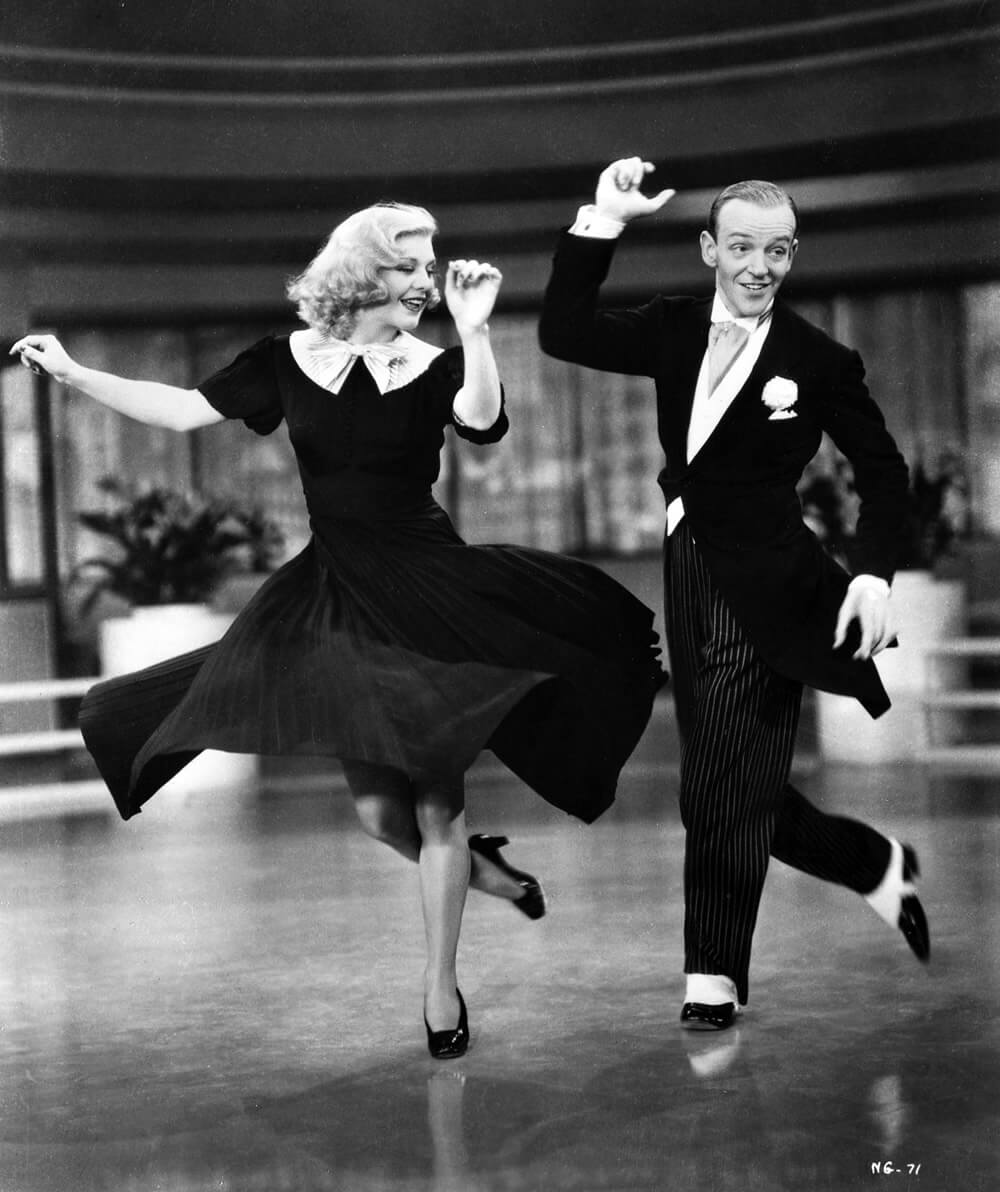
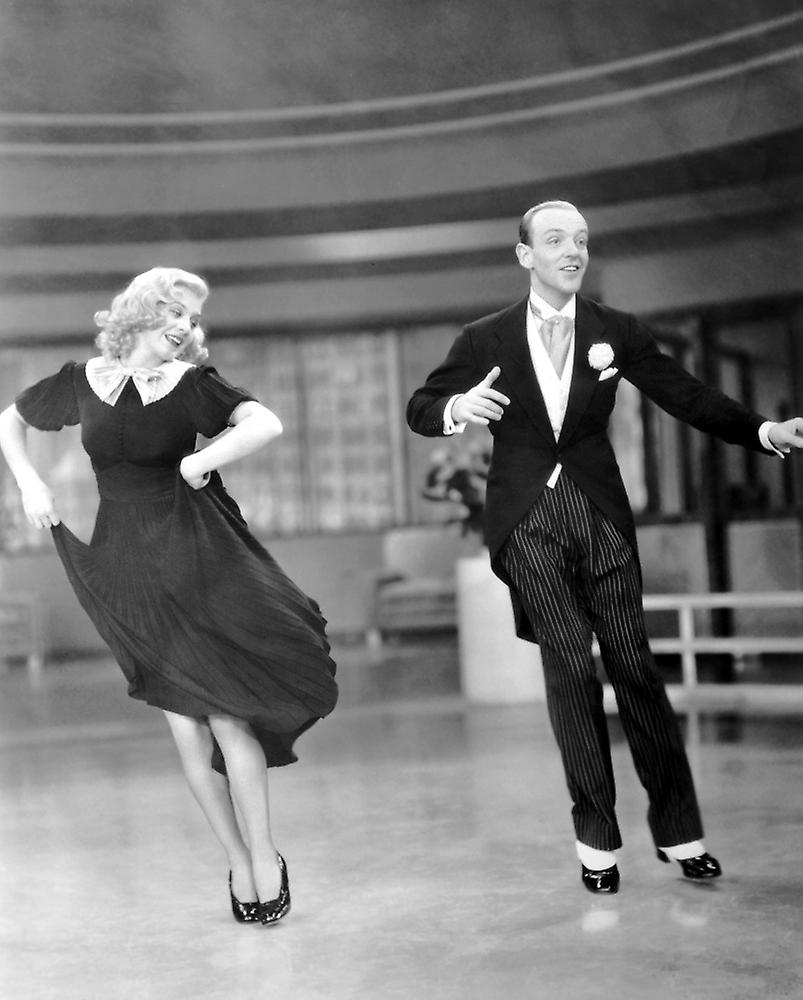
Astaire plays dancer Jerry Travers, who encounters a slightly annoyed Dale Tremont (Ginger Rogers) when he tap dances in the hotel room above hers. Dale goes upstairs to complain, but Jerry is immediately taken with her, performing a soft shoe routine to help her drift back to sleep. The next day, Jerry returns to pursue her, and they enjoy a delightful afternoon dancing amidst a thunderstorm. However, Dale mistakenly thinks that Jerry is actually Horace Hardwick (Edward Everett Horton), his producer, whose wife, Madge (Helen Broderick), is a close friend of Dale's.
 |
| Fred Astaire and Edward Everett Horton |
 |
| Ginger is not amused.... |
 |
| It turns out to be lovely day to be caught in the rain after all! |
Due to this misunderstanding, Dale decides to visit Madge in Italy, where she models clothes designed by Alberto Beddini (Erik Rhodes), who also has his sights set on her. When Jerry discovers she’s left, he convinces Horace to take him to Italy for the weekend. The ensuing mix-up between Horace and Jerry keeps everyone guessing, with Horace's devoted servant Bates (Eric Blore) caught in the amusing chaos.
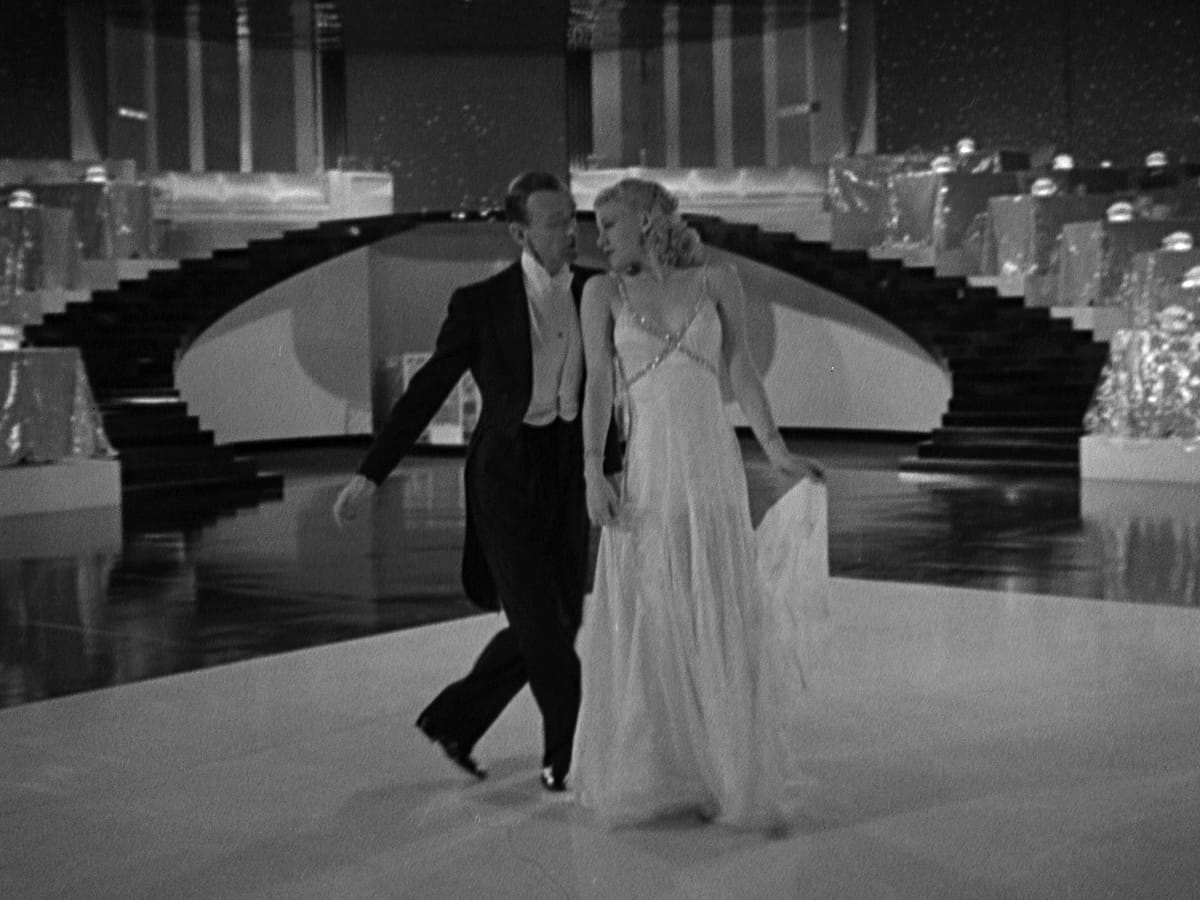
Dale is taken aback that Madge supports her and Jerry's dancing, leading to one of the film's most memorable scenes. Ultimately, Dale is charmed by Jerry's serenade of "Cheek to Cheek." While mistaken identity can sometimes be a frustrating plot device, in Top Hat, it serves a delightful purpose: it provides the characters with a reason to dance and share their romantic moments.
Fred Astaire truly embodied elegance and class, and I was immediately captivated by him. His fluid movements, grace, and impeccable style, combined with his beautiful voice, made him unforgettable.
 |
| Fred Astaire |
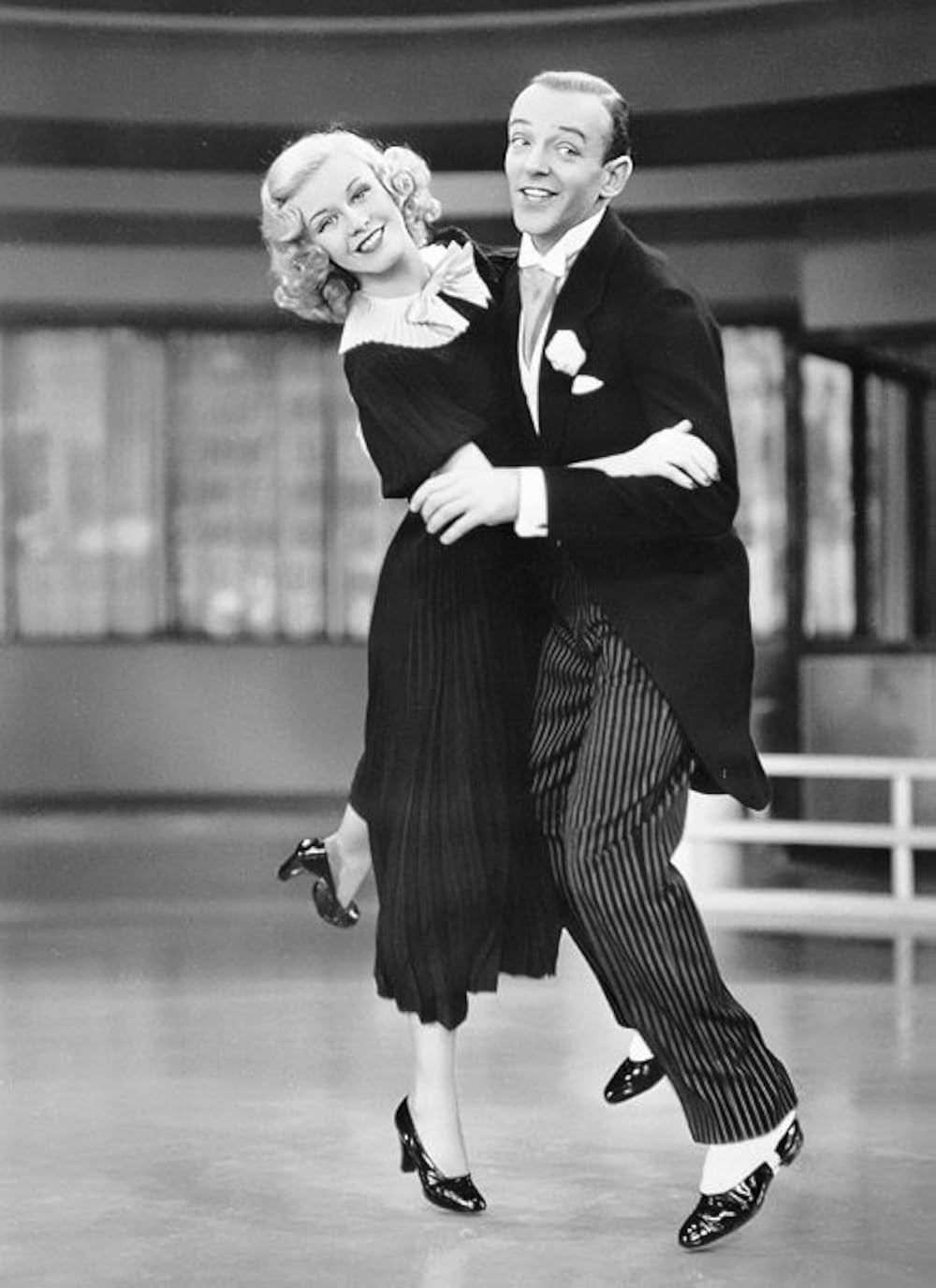
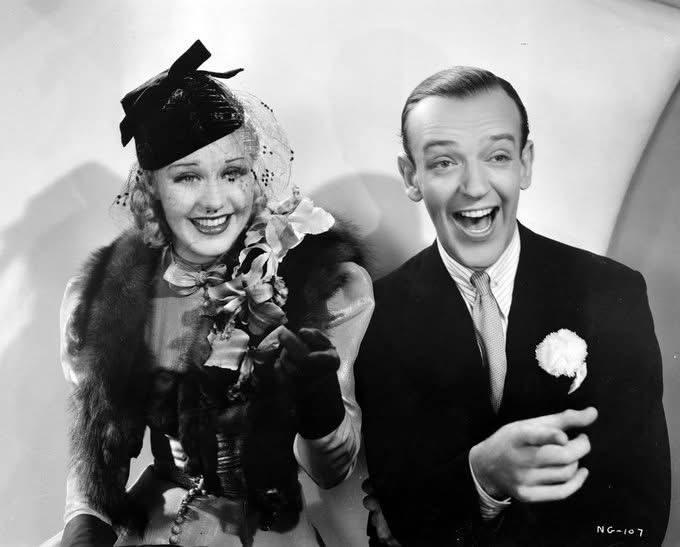
When Fred partnered with Ginger, they created a unique and electrifying duo. Rogers brought a lively energy, authenticity, and a sparkle that lit up the screen.
 |
| Ginger Rogers |
As actress Katharine Hepburn famously noted, "He gives her class, she gives him sex." Their partnership was also immortalized in a cartoon by Bob Thaves for his Frank and Ernest series, which appeared in a Los Angeles newspaper. In it, a character humorously remarked that Ginger "did everything he did… backwards and in high heels." This only added to her incredible charm.
The supporting characters in Top Hat are genuinely hilarious, and their amazing performances truly bring the screwball comedy to life. No other film boasts such a strong and unforgettable supporting cast. Erik Rhodes shines as the enthusiastic Italian fashion designer, Alberto Beddini, giving a comedic performance that recalls his lively role from The Gay Divorcée. Helen Broderick's Madge serves as a perfect counterpoint with her effortless dry humor and clever exchanges. And we can't overlook the comedic duo of Edward Everett Horton and Eric Blore. Horton is exceptionally expressive, known for his signature exclamations and perfectly timed double takes. Blore, playing his valet, complements him with polite barbs and eye rolls.
 |
| Horton, Astaire and Helen Broderick |
 |
| Rogers, Astaire and Erik Rhodes |
 |
| Horton and Eric Blore |
 |
| The gang is all here! |
The music in Top Hat is absolutely perfect. From Astaire's lament about being a carefree bachelor in "No Strings (I'm Fancy Free)", to the lively dance in "Isn't This a Lovely Day?", to the iconic "Top Hat, White Tie and Tails"—where Astaire, advised by onlooker Jimmy Cagney, playfully "guns down" a row of men with his cane—each song is a masterpiece. The film's emotional heart is the timeless "Cheek to Cheek," a duet that expresses the couple's love with increasing passion, culminating in Ginger's beautiful moment of surrender. The fun "The Piccolino," sung by Rogers, rounds out the soundtrack with its festive gondola parade and choreographed chorus.


These songs truly captured the cultural landscape of their time. For the first time ever, a single composer had five songs featured on "Your Hit Parade" simultaneously. "Cheek to Cheek" became a massive success, holding the #1 spot for five weeks, staying in the top ten for eleven weeks, and ultimately being recognized as the #1 song of 1935. It even received an Oscar nomination in 1936 and was later inducted into the Grammy Hall of Fame in 2000.
It's easy to see why songwriters like Irving Berlin and Cole Porter held Astaire in such high regard. They admired his distinctive style, diction, and phrasing, appreciating his talent for conveying a song's essence rather than relying solely on vocal strength. I completely agree with this sentiment. His unique delivery, paired with his musical skills, is what makes these songs endure through the years.
 |
| Astaire and Rogers with Irving Berlin |
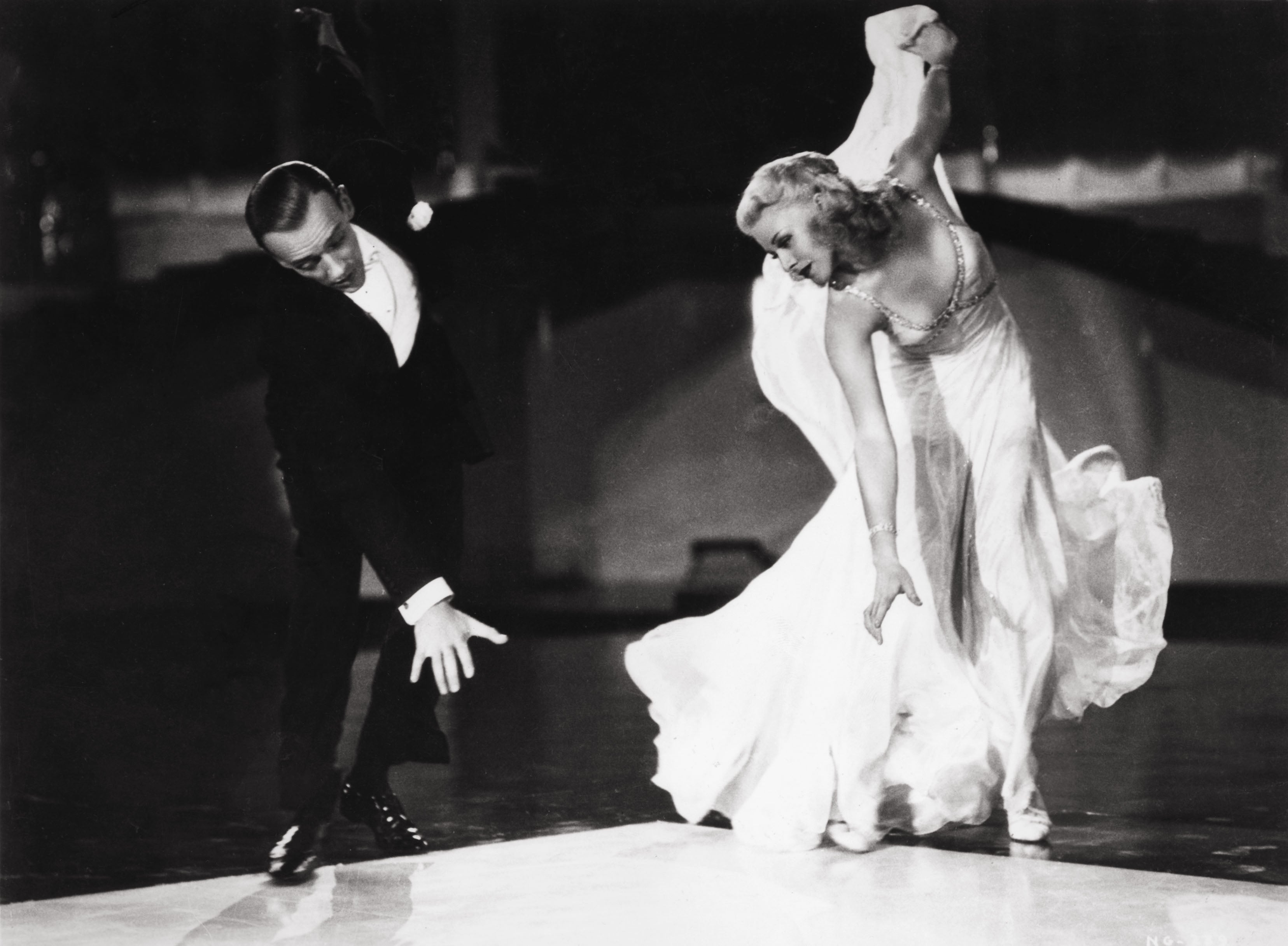
Rogers' iconic "Cheek to Cheek" dress, affectionately dubbed "Feathers" by Astaire, was actually designed by Rogers herself, though it wasn't finished in time. This led to feathers flying into Astaire's face and scattering all over the floor during filming. The chaos caused by the feathers created some frustration and tension on set, but they managed to push through.

Despite these hurdles, they continued filming, and the flying feathers became a memorable part of their dance. The scene stands as a remarkable example of their dedication. Later, Astaire and co-choreographer Hermes Pan surprised Rogers with a gold feather charm for her bracelet and serenaded her.

The routine was humorously parodied when Astaire danced with Judy Garland in the 1948 film Easter Parade.
The film brilliantly utilizes dance
not only as entertainment but also as a profound form of expression.
When Jerry and Dale dance, their emotions take center stage, making
words feel secondary to their "love-making." Astaire's choice to film
the dances in long, uninterrupted takes allows viewers to fully
appreciate the talents of both him and Rogers, creating an immersive
experience that makes you feel as if you are right there with them.
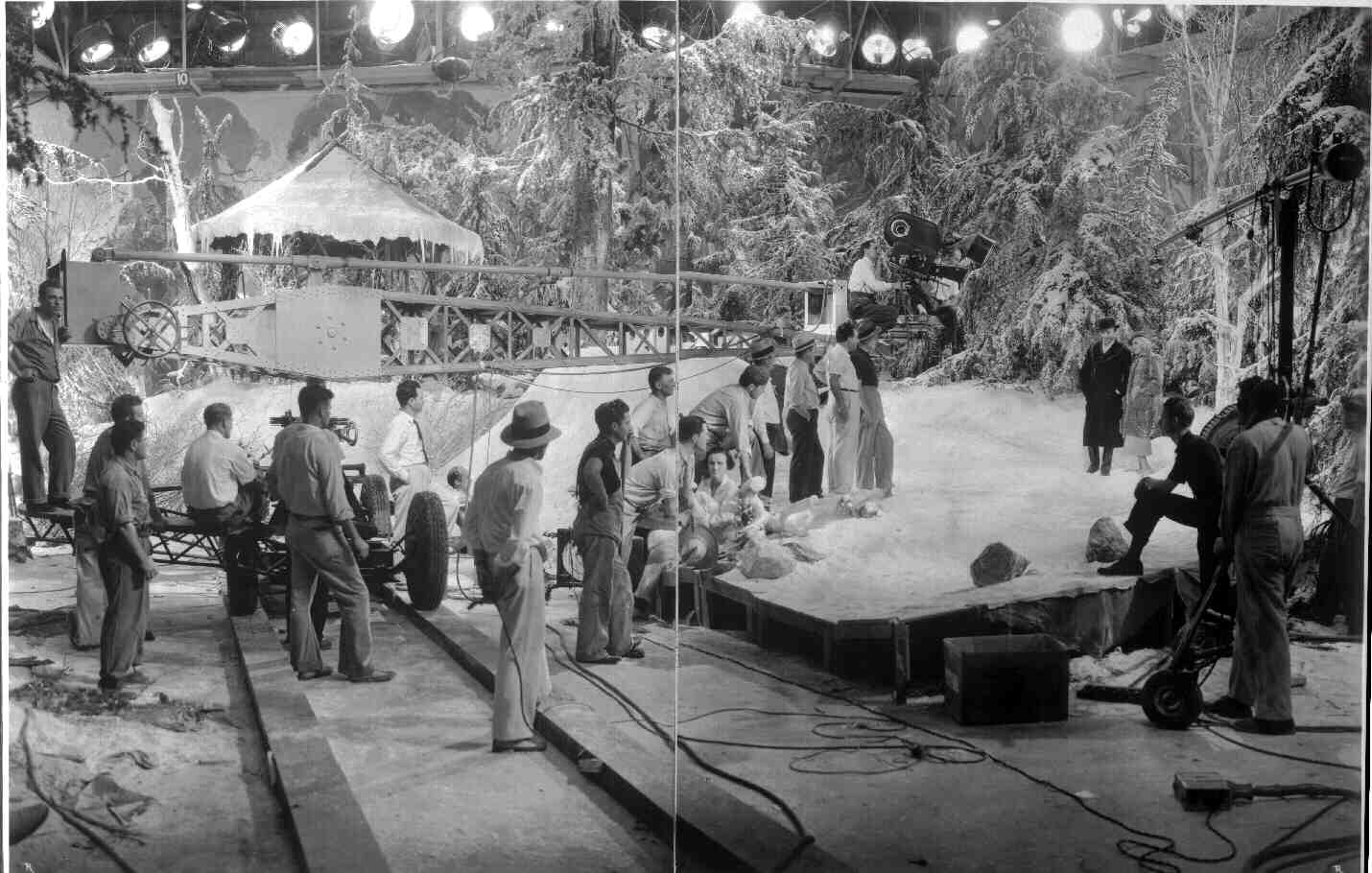
The stunning sets of Top Hat truly stand out as characters in their own right, showcasing the incredible work of the RKO Art Department. These Art Deco-inspired designs were so grand that they consumed a significant portion of the film's budget, marking the largest set ever constructed on the RKO lot at the time.
The art direction, which received an Academy Award nomination, was led by Carroll Clark and Van Nest Polglase. Polglase, who headed RKO's art department from 1932 to 1943, is known for designing artwork for 331 films, including nine musicals featuring Astaire and Rogers, as well as the legendary Citizen Kane. Their sets, especially the lavish Venice set with its canals and gondolas, are renowned for their stunning beauty and elegance.
Their sets are expansive yet minimalist, crafted to be visually impressive while also practical, providing ample room for intricate dance and comedy sequences. This fantastic design contributed to the film's enchanting and magical ambiance, which, like myself, audiences would love to experience.
The film, which had a production budget of $609,000, premiered at Radio City Music Hall in New York on August 29, 1935, and quickly became a sensation. It set a record by grossing $134,800 in its opening week, leading to the deployment of twenty-five police officers to manage the enthusiastic crowds.
In just three weeks, the film brought in an impressive $350,000 at the Music Hall alone. Overall, Top Hat generated $1,782,000 in rentals in the U.S. and Canada, and an additional $1,420,000 internationally, resulting in a remarkable profit of $1,362,000 for RKO. This made it the studio's most profitable film of the 1930s and a significant box office success. The film also received critical acclaim, earning Academy Award nominations for Best Picture, Art Direction (Carroll Clark and Van Nest Polglase), and Original Song.

The significance of the film is immense. It transformed the landscape of movie musicals, shifting away from the "backstage" approach that studios like Warner Brothers preferred in the early 1930s. Rather than presenting musical numbers as part of rehearsals or stage performances, Top Hat redefined the genre, integrating songs and dances into the very fabric of the story.
In 1935, the film played a crucial role. With America grappling with the Great Depression, Top Hat did what cinema does best: it lifted spirits and embodied the essence of escapism. Its dazzling world of glamour, romance, hope, and magic enchanted viewers, providing a compelling fantasy that allowed people to momentarily forget their hardships.
For those 101 minutes, the film remains timeless and always brightens my mood. I’ve come to realize that these classics are more than mere entertainment. While I had begun to delve into some classics, Top Hat opened my eyes to the true impact of cinema—its ability to shape your emotions, stir feelings, and enhance your appreciation for the art form. It whisks you away to a realm where anything feels achievable. I can’t help but smile every time I watch it, a testament to the transformative power of film.

It's no wonder certain scenes from the film were used in later movies, especially its "Cheek to Cheek" segment:
In The Purple Rose of Cairo (1985), Mia Farrow plays Cecilia, who watches the romantic "Cheek to Cheek" dance from Top Hat at the film's end. She seeks joy and escape from her harsh reality after leaving her lover, only to confront the futility of such escapism. The scene highlights the romantic dance as a symbol of the wish-fulfillment movies provided to Depression-era audiences, yet also reveals the painful truth that genuine happiness couldn't be found in films when her own life was falling apart.
In The English Patient (1996), the main character, Count László de Almásyly (Ralph Fiennes), reminisces about watching the film with his lover, Katharine Clifton (Kristin Scott Thomas), during a happier time. The musical score sharply contrasts with the tragic and complicated realities of their wartime adulterous love affair.
In The Green Mile (1999), Top Hat acts as the trigger for the elderly Paul Edgecomb to recall his experiences on death row. Before his execution, John (Michael Clarke Duncan) makes his last request to watch a movie, having never seen one before. So he, Paul, and the other officers watch the film, specifically the 'Cheek to Cheek' scene.
I think actress Sophia Loren said it best: growing up poor in Italy during World War II, she would go with her sister to the movies. “To see these grand, beautiful buildings, and the clothes, the hair, the dance, the music, Ginger Rogers, Astaire... we really thought we belonged to another world. So for some minutes, some instant, we were happy."
I owe a debt of gratitude to this film for igniting my passion for classic cinema and for forever making me feel like "I'm in heaven and my heart beats so that I can hardly speak and I seem to find the happiness I seek when we're out together dancing cheek to cheek...."
Some fun tidbits:
- A bright blonde Lucille Ball makes a brief appearance as a flower shop girl early in the film. You'll catch a glimpse of her from behind at an angle, and she has just a few lines to say.
- Director Mel Brooks revealed that his favorite comfort films are "any Fred Astaire and Ginger Rogers movie. No one ever gets killed, and there is always a happy ending".
- The two-minute dance of "The Piccolino" was filmed in a single take.
- To highlight the "Big White Set" of the Lido, the water in the canals was dyed black.
- It was on this film set that Berlin's most beloved and popular song, "White Christmas," serenaded the cast and crew with a tune he was working on.
The dress Rogers wore in "The Piccolino" performance was donated to the Smithsonian Institution in May 1984.

Comic actress Helen Broderick began her career in vaudeville with her husband Lester Crawford. Their son was actor Broderick Crawford.

- Mark Sandrich directed five Astaire-Rogers films and later directed Astaire in Holiday Inn (1942) and the war film So Proudly We Hail! (1943), starring Claudette Colbert, Paulette Goddard, and Veronica Lake. He was the father of TV director Jay Sandrich. Sandrich started as an assistant at Desilu on I Love Lucy (1951-1957) before directing comedies like The Mary Tyler Moore Show (1970-1977) and The Cosby Show (1984-1992). And his sister, Ruth Harriet Louise, was the first woman photographer active in Hollywood, managing MGM's portrait studio from 1925 to 1930.