Showing posts with label Glenn Miller. Show all posts

πŸ’•❄️ Love Amid the Snowflakes: Sun Valley Serenade (1941)

Before I dive into this movie review, I should mention that I haven't seen all of Sonja Henie's films. In a previous post, I talked about Olympic stars who leaped acting, and Sonja was one of them. She was a major star for 20th Century Fox and appeared in many films, much like Esther Williams did for her studio, but I haven't had the chance to explore her entire filmography. 


What I do remember clearly is the fun, snowy setting, the enchanting singing, the ice skating, the dancing, and the exciting skiing in the 1941 production of Sun Valley Serenade by 20th Century Fox. 

My appreciation for Glenn Miller's music grew when I watched this film on American Movie Classics, hosted by Nick Clooney. Out of the two movies featuring Glenn Miller and his Orchestra, the other being Orchestra Wives, Sun Valley Serenade is my favorite!


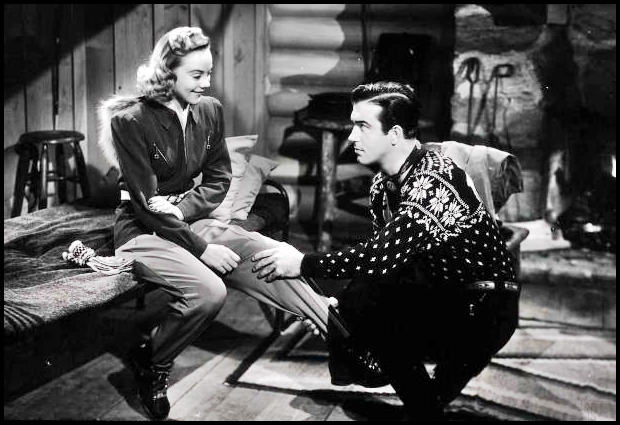
Directed by H. Bruce Humberstone, this romantic musical comedy stars Sonja Henie, John Payne, Glenn Miller (making his debut film appearance after signing with 20th Century Fox), Milton Berle and Joan Davis for some comic relief, and Lynn Bari. It features  Miller's Orchestra with Tex Beneke, Paula Kelly, and the Modernaires as vocalists. 


Milton Berle and Joan Davis


The Nicholas Brothers and Dorothy Dandridge's rendition of "Chattanooga Choo Choo," which was nominated for an Oscar for Best Song, inducted into the Grammy Hall of Fame in 1996, and awarded the first Gold Record for selling 1.2 million copies, is wonderful to watch. 


The plot may seem a bit absurd, but that doesn’t take away from the fun. To sum it up: Daryl Zanuck’s trips to Sun Valley, Idaho, inspired this film. Ted Scott (John Payne), a pianist in a swing orchestra, takes the advice of his manager Nifty Allen (Milton Berle) and decides to adopt an orphan girl from Nazi-occupied Norway. To their surprise, the "girl" is actually the grown-up Karen Benson (Sonja Henie). It’s love at first sight, and she follows him to their Christmas performance in Sun Valley, eager to win his heart, even though he has a girlfriend, Vivian Dawn (Lynn Bari), who is a soloist with Miller's band. 


John Payne and Lynn Bari

In addition to "Chattanooga Choo Choo," other Glenn Miller songs featured in the film include "Moonlight Serenade," "It Happened in Sun Valley," "I Know Why (And So Do You)," and "In the Mood."
 

Sun Valley Serenade was only the second John Payne film I had watched, the first being the cherished Christmas classic Miracle on 34th Street. And yes, I had a crush on him—he looked handsome at the piano and in those cozy winter sweaters!

While the Christmas setting is present, it isn’t overly emphasized. The breathtaking scenes of skiing, skating, and outdoor fun create an authentic and magical atmosphere in the winter landscape.

The blend of comedy, romance, and music is just right.  The romantic chase on the snowy slopes of Sun Valley, filmed on location, adds to the charm, with skiing subtly representing emotional connections, as both Ted and Karen share a love for the sport, unlike Vivian.


The music truly shines, particularly the track "I Know Why." While “At Last” was originally intended for a live performance, it ended up being used as background music and later appeared in Orchestra Wives (1942). 

Sun Valley's ski school director Otto Lang, celebrated for his award-winning shorts and successful features at Fox, directed the ski sequences, with Olympic champion Gretchen Fraser substituting for Henie during the longer shots. 


Jealous of Karen and Ted’s developing romance, Vivian quits in a fit of anger. Henie then puts on a spectacular ice show as a replacement, captivating the audience at the Sun Valley resort hotel. 

The finale, featuring stunning ice-skating scenes, was filmed both on location in Sun Valley and on a chilly soundstage in LA, achieving a remarkable reflective effect in black and white thanks to treated black ink on the ice.


Today, the film continues to enchant audiences at the Sun Valley Resort’s opera house, playing around the clock in lodge hotel rooms, highlighting the lasting appeal of this snowy musical delight!


We Remember and Honor πŸ‡ΊπŸ‡Έ Glenn Miller


"Next to Letters from Home, the Major Glenn Miller Army Air Force band was the greatest morale builder in the ETO (European Theater of Operations)."--Lt. Gen James "Jimmy" Dolittle, Eighth Air Force Commander 

 
[Exhibit Video I captured during my visit to the National Museum of the United States Air Force in Dayton, Ohio]


In 1942, famed band leader and trombonist Glenn Miller volunteered for service in the Army Air Forces. Miller organized some of the most talented dance musicians of the era into what became known as the "Glenn Miller Army Air Force Band." In 1944, the band transferred to the UK to boost morale for homesick military personnel. While there, the band made more than 350 appearances—which were eagerly attended by 1,250,000 service members —and more than 500 radio broadcasts.
 
 
On December 15, 1944, Miller took off on a flight to Paris in a UC-64 to make arrangements to move the band to France. For unknown reasons, the aircraft crashed somewhere in the English Channel. Although Miller was lost, his band continued touring until the end of 1945.
 
The Glenn Miller Band was the top-selling recording group from 1939 to 1942. Within four years, Miller achieved 16 number-one singles and 69 top-10 hits, surpassing the success of icons such as Elvis Presley and the Beatles throughout their entire careers. Miller and his band were featured in the films Sun Valley Serenade and Orchestra Wives, both produced by Twentieth Century Fox. In the 1954 biographical film The Glenn Miller Story, actor James Stewart depicted Miller's life and musical career. Miller is acknowledged as a pioneer of modern military bands in the United States. 
 
He voluntarily enlisted in the US military in 1942 to provide entertainment for troops during World War II, ultimately serving in the US Army Air Forces. Following established military protocol, a year and a day after his disappearance, Miller was officially declared deceased since his body could not be recovered. As a tribute, a memorial headstone was placed at Arlington National Cemetery in Virginia, operated by the US Army. In February 1945, he was posthumously honored with the Bronze Star Medal.