Showing posts with label Pre-Code. Show all posts

🎥 Review: Three on A Match (1932)

 “I suppose I should be the happiest woman in the world. Beautiful home, a successful husband, and a nice youngster, but . . . somehow, the things that make other people happy leave me cold. I guess something must have been left out of my makeup.”


Today marks the 90th anniversary of the enforcement of the Production Code on this day in film history. The Hayes Code, or Hays Code as some like to call it, was established in 1930 but didn't start cracking down on those filmmakers until 1934. Its main goal was to keep films squeaky clean and avoid government interference. But before mid-1934, some movies were rebels who didn't care about those guidelines. This era gave us some raw and unfiltered cinema that truly captured the essence of the time. I'm low-key obsessed with pre-code flicks, there's just something so refreshingly honest about them. 


I recently introduced the pre-code classic Three on a Match from 1932, to my boyfriend, who had never seen it before. It was so fun to watch his 'what in the world?' reactions. The production code for this film is full of 'DON'Ts' - sexuality, adultery, drug addiction, criminal underworld, and lingerie! It blends timely issues and societal taboos into a fast-paced 61-minute runtime. Watching it with someone new brought a fresh perspective and made me fall in love with it all over again.

I remember being completely captivated by the grittiness of the material, the authenticity of the characters, and the reckless abandon of the scenes. I'd even go as far as to say that it's a fantastic movie to start with if you're curious about Pre-Code Films.


The title "Three on a Match" comes from a superstition that lighting three cigarettes from the same match would bring bad luck to the third person. This belief was said to have originated during World War I when people feared that extended match lighting would make them a target for enemy gunfire. However, it was later revealed that a match company had invented this superstition to boost sales by discouraging match sharing. 
 
A single match struck at lunch to catch up triggers a chain of events for one of the three women. It becomes evident that the three childhood friends who all graduated together from New York’s P.S. 62 have taken different paths since their school days, leading to quite distinct lives as they grew older.
 
Rebellious girl to reformed actress Mary (Joan Blondell), sweet class valedictorian to stenographer Ruth (Bette Davis), while the snobbish most popular girl in school Vivian (Ann Dvorak) is unhappily married to the wealthy lawyer Robert Kirkwood (Warren William) and has a young son (Buster Phelps). During the lunch, Vivian confides about her unhappiness. In a twist of fate, Vivian, who once looked down upon Mary's unrefined behavior, now finds herself filled with envy towards the two of them. She can't help but feel that her life has become tiresome and pointless.
 
Junior played by Buster Phelps

Warren William as Kirkwood

He suggests that Vivian should go on a solo trip to Europe to lift her spirits, bringing Robert Jr. along with her. During the trip, she meets a small-time criminal and charming gambler named Mike Loftus (Lyle Talbot). She's found her passion in him and they both disappear with her son. Vivian initially finds the excitement of her new life and forbidden romance thrilling, but excessive partying, cocaine, drinking, and smoking are taking a toll on her. 
 
Lyle Talbot as the swarmy gambler & hood Loftus


  Mary finds Ruth neglecting her dirty and hungry son. She persuades Ruth to allow her to take care of him. Unable to decide, Ruth discloses the child's whereabouts to Kirkland. Kirkland then rescues his son and marries Mary. Ruth becomes the child's caregiver.


Warren William lights two, not three cigarettes

Mary comforts Robert

Junior has a new caretaker in Ruth & stepmother in Mary.


Loftus manages to get into debt with mobster Harve (Humphrey Bogart's first role as a gangster, borrowed from Columbia) and his boss Ace (Edward Arnold). In a desperate move, he tries to blackmail Kirkwood by threatening to expose to the media that his new wife Mary had a criminal record for grand theft. When this plan fails, he kidnaps Edward Jr. 

Never blackmail the King of Pre-code Warren William!


Humphrey Bogart


The race is on to find the child and take down Harve, Ace, and their nasty henchmen Allen Jenkins and Jack La Rue. What will Vivian do?


I adore how LeRoy expertly nails the close-up shots and action-packed scenes in this film. In comparison to many modern movies that stick to static camera setups and medium shots, this one stands out. And let's talk about those newspaper headlines! Montages everywhere! 


These montages not only mark the passage of time (from 1919 to 1931) but also capture the distinct attitudes of that era.


Publicity Stills of Blondell & Davis.


Joan Blondell, in my humble opinion, is the ultimate Pre-Code queen. She effortlessly embodies her sassy and reliable self, delivering wisecracks and authenticity that are simply unmatched. (See what I did there? Lol!) In the role of the reserved and bookish secretary, Bette Davis gave a performance that left Director LeRoy less than impressed. Rumor has it, that she spent much of the filming period butting heads with him over her acting. 
 
“There was Three on a Match. They gave me three unknown girls in that one – Joan Blondell, Bette Davis, and Ann Dvorak. I made a mistake when the picture was finished. I told an interviewer that Joan Blondell was going to be a big star, that Ann Dvorak had definite possibilities, but that I didn’t think Bette Davis would make it. She’s been cool to me ever since.”-- (Le Roy 1974)
 
 
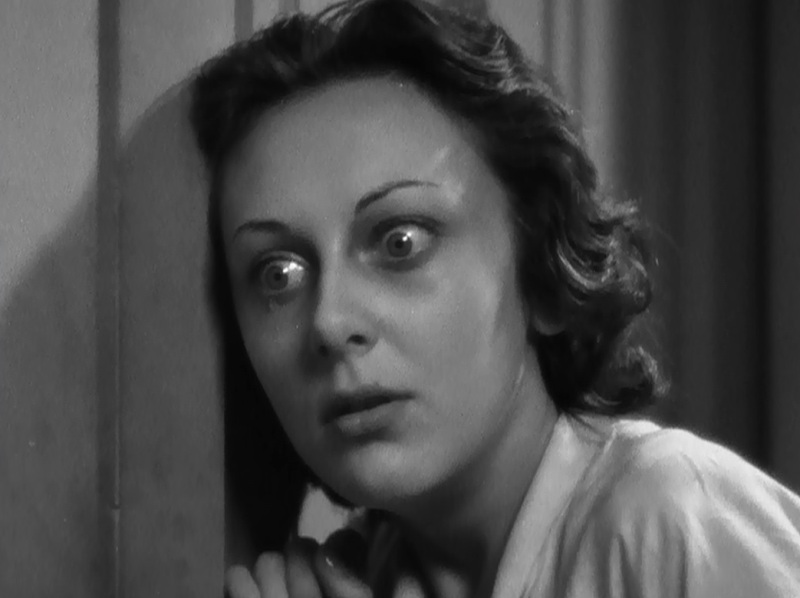
However, this is Ann Dvorak's film. Dvorak's compelling performance effectively portrays the impact of her drug addiction on her descent into poverty, as evidenced by her mental and physical deterioration. Blondell, William, and Davis share some lighthearted moments in the film, but overall, it is tough and direct.
 

Ann Dvorak as Vivian
 
The last eight minutes of the movie are unbelievably intense and I don't want to spoil it for anyone who hasn't seen it yet. It's one of the reasons why I love pre-code films so much, they know how to keep you on the edge of your seat! 
 
                                            Fun Facts
 

The role of the student character Vivian, portrayed by the young, brunette Anne Shirley, is credited under her original stage name, Dawn O'Day.

Virginia Davis, who was once recognized as the live-action Alice for Walt Disney in the 1920s plays a young Joan Blondell.      
 Betty Carse is a young Bette Davis.


🎥 Review: It Happened One Night (1934)

“Take me to your island.  I want to do all those things you talked about. . . .  I love you.  Nothing else matters.”

The forerunner, the grandparent of screwball comedies It Happened One Night opened at New York's Radio City Music Hall on this day February 22, 1934!

The charming pre-code film, directed by Frank Capra, with a screenplay by Robert Riskin, starring Clark Gable and Claudette Colbert, soared on to become 1934's most notable success.

Based on a story by Samuel Hopkins Adams, a headstrong heiress (Ellie) finds herself on a road trip of discovery with an unemployed cynical newspaper reporter (Peter). A runaway bride, he offers to help her reunite with her soon-to-be husband in exchange for an exclusive story, leading to an unexpected romance.  Due to the 1930 Hays Code being in force while the film was shot, its implied sexual content was primarily expressed with witty banter and innuendo.


The film focuses on traditional gender roles and the Great Depression. The ignorance that Ellie has of lower-class struggles highlights the difficulties they face. Coming from different economic worlds, their characters have very different experiences and understandings of the world. Their love for each other transforms them, providing a renewed spirit and the possibility that social divisions can be bridged.


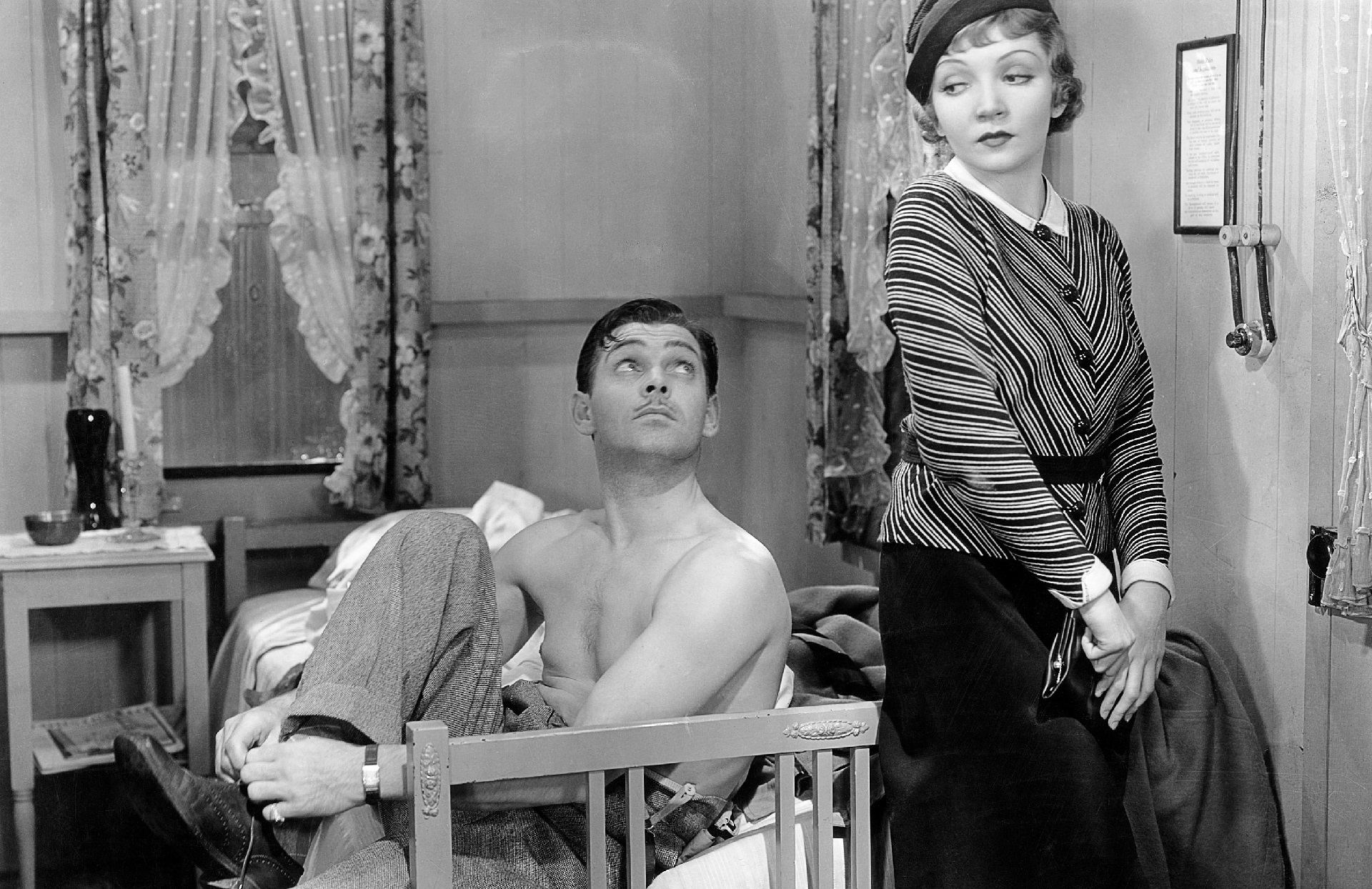
On loan from MGM, Gable didn't bother to read the script. He arrived on the first day of shooting drunk and just wanted "it over with". Capra reprimanded him and he was cooperative and sober for the rest of the shoot. After not getting along with Capra in an earlier film For the Love of Mike (1927), Colbert accepted the part for double the salary, and a quick filming schedule so she could leave on vacation. Despite their shared could not care attitude, dissatisfaction with the script, and Colbert giving Capra a hard time, the film is perfection. Since both spend the majority of their screen time together, they needed to exude chemistry from the get-go. And they sure did! They give the film a relaxed quality that's light, funny, and refreshing to watch. The studio didn't have faith in the film so they barely promoted it. But after word of mouth and expanding through the States, Columbia earned over $2.5 million back on its $325,000 budget and another two million in theatrical rentals. It was the first film to win Academy Awards for Best Picture, Director, Actor, Actress, and Screenplay.


 On the Set with Gable, Colbert & Director Frank Capra

On The Set with Colbert, Gable and Capr


Did you know this was Bugs Bunny's creator Friz Freleng's favorite film and he based Bugs on Gable's mannerisms of eating carrots and talking quickly at the same time?


There was going to be a stunt double used for Colbert since it was immodest to show her leg. When she saw the stunt double, she said, "That's not what my leg looks like!" and insisted on using her leg.


Actresses considered for the lead role were Myrna Loy who hated the script and said "Claudette had the legs for it”. Loretta Young was suggested but Capra said No. Miriam Hopkins, who supposedly called it “just a silly comedy.” Sorry, Bette Davis, Warner Bros. won't lend you out. Carole Lombard wasn't available. Constance Bennett and Margaret Sullavan also said No. Eventually, Columbia's Harry Cohn suggested Colbert. 1934 was a great year for Colbert, appearing in two of the year's highest-grossing films Cleopatra and It Happened One Night.


Legend has it, there was a large decrease in undershirt sales around the country when Gable in the undressing scene had trouble removing his. As a result, some underwear manufacturers tried to sue Columbia.


 Actors considered for the lead actor was Robert Montgomery, who turned it down saying "the script was the worst thing he had ever read". And  Fredric March who also refused the part.


The fine supporting cast includes the likes of Walter Connolly and Roscoe Karns.

Colbert decided not to attend the ceremony since she felt she would not win. She thought it was the "worst picture in the world" and planned to take a cross-country train trip. After she was named the winner, studio chief Harry Cohn sent someone to get her off the train and to take her to the ceremony. Colbert arrived wearing a suit that she had Paramount Pictures costume designer, Travis Banton, make for her trip. Despite the animosity toward Capra, she thanked him in her acceptance speech.

Shirley Temple presents the Best Actress Oscar to actress Claudette Colbert for her role in, "It Happened One Night"
 

Gable gave his Oscar to a child who admired it. The child returned it to the Gable family after Clark's death. On December 15, 1996, Gable's Oscar was auctioned off to Steven Spielberg for $607,500, who donated the statuette to the Motion Picture Academy.


"We made the picture quickly--four weeks. We stumbled through it, we laughed our way through it. And this goes to show you how much luck and timing and being in the right place at the right time means in show business; how sometimes no preparation at all is better than all the preparation in the world, and sometimes you need great preparation, but you can never out-guess this thing called creativity. It happens in the strangest places and under the strangest of circumstances. I didn't care much for the picture, ] it turned out to be 'It Happened One Night'." ---Director Frank Capra


The picture was the first to win the five most esteemed Academy Awards: Best Picture, Best Director, Best Actor, Best Actress, and Best Adapted Screenplay. The film was remade several times: Musicals, Eve Knew Her Apples (1945) and You Can't Run Away from It (1956). And Indian films Chandrodayam 91966), Dil Hai Ke Manta Nahin (1991) and Hudugaata (2007).