

😱DISAS-TOBER! 🎥 REVIEW: Earthquake (1974)
"Who do you have to know to get a drink around here?"

This month, I'm sticking with my Disas-tober theme, so I decided to check out a movie my mom saw in theaters. It's the classic 1974 film Earthquake, which imagines what would happen when a massive 9.9 quake hits L.A.
%20newspaper%20ad%205.jpg)
Honestly, you all know I love a cheesy movie, but this one was a bit of a slog. A lot of it just didn’t click for me, and I felt pretty bored. But then when the BIG earthquake finally hits, it finally gets interesting. The special effects are the highlight and make it worth watching at least once. The visuals and sound are really impressive. My mom told me that the film used something called Sensurround, which was meant to enhance the audio experience during screenings. She said her seat shook!

Released on November 15, 1974, it features a star-studded with Charlton Heston, Ava Gardner, George Kennedy, Lorne Greene, Genevieve Bujold, Richard Roundtree, and even a funny cameo from Walter Matthau, plus a young Victoria Principal with a wild afro that was her own. As for the acting, Heston is his usual wooden self, and Gardner’s character is so over-the-top shrewish that it’s hard to watch. Bujold’s performance is bad and so is the romance with Heston. And why was Lorne Greene cast as Gardner’s dad when they’re only a few years apart? The only performance I liked was George Kennedy as an angry and disillusioned cop.
After the earthquake hit, I found myself bored again.


Why would they choose to set up a hospital rescue in the lower section despite being warned about aftershocks?
Why should I be concerned about Marjoe Gortner, who plays a National Guardsman with a violent personality in the movie? Why do I not feel any connection to any of the characters, including Bujold's kid who goes biking when the earthquake hits? The list goes on.
I just couldn't seem to connect with any of the characters in the film or stories, so I found myself not really caring about what happened to them. Unlike The Poseidon Adventure and The Towering Inferno (which I'll be reviewing soon), where I really cared about the characters and their outcomes.
The editing is choppy, the subplots are weak and badly acted, and some of the cuts are completely illogical, making the story hard to follow. However, when the earthquake hits, the film truly shines with incredible practical effects. From miniature buildings to detailed matte paintings, the attention to detail is outstanding. Trust me, the earthquake scene will leave you on the edge of your seat.


Earthquake introduced a groundbreaking technique specifically designed for filming. They used a "shaker mount" camera system that simulated earthquake effects by shifting the entire camera body a few inches side to side, instead of just shaking it on a regular tripod. This created a much more realistic motion. This camera setup was mainly used for outdoor scenes and other on-location shoots. Additionally, Universal's sound team created a system called "Sensurround," which consisted of large Cerwin-Vega speakers powered by BGW amplifiers. This system produced sub-audible "infra bass" sound waves at an intense 120 decibels, similar to the noise of a jet taking off, allowing viewers to feel the earthquake's impact. The film also featured a large number of highly skilled stunt performers for the most dangerous scenes, like high falls and dodging debris, setting a record in Hollywood with 141 stunt artists involved in the production. There have been reports of audience members experiencing nosebleeds and broken ribs due to the Sensurround system.


 |
| My face as I watched Earthquake |
After witnessing all the chaos and destruction from the earthquake, a drunk Walter Matthau's is still just sitting there. It’s kind of funny! It seems like he didn’t want too much attention since he’s credited under the name Walter Matuschanskayasky.
I totally get where he's coming from. His face was like a mirror of how I felt. I guess I should've watched the movie like my mom did in 1974, but I was only a year old back then! 😆 She said it was a blast and I wish I could've been there to experience it.
 |
| The miniature sets |
Even though around 800 theaters in the U.S. and 2,000 worldwide could use the Sensurround technology, it was rarely utilized after the film Earthquake and faded away within five years. The only other films that used Sensurround were Midway in 1976, which was successful; the mostly forgotten disaster film Rollercoaster in 1977, which didn’t do well; and Battlestar Galactica in 1978, a strange re-edit of the TV series' initial episodes. After that, the technology was never seen again.
The film was directed by Mark Robson, with a screenplay by Mario Puzo and George Fox, and the music was composed by John Williams.

The concept of earthquakes led to the creation of the attraction Earthquake: The Big One at Universal Studios in both Florida and Hollywood.
"Lights, Camera, Blog Action: Joining the Classic Movie Blog Association!"
I am happy to announced that I've been accepted into the prestigious Classic Movie Blog Association!

Since 2009, the CMBA has led the blogging industry in supporting its members with their love of classic movies and blogathons - all created with classic cinema blogging standards and recognizing excellence within the community of classic film blogging as well. During their organization's "official" monthly blog, they feature a different member, and this month - it's yours truly! I'm excited to share some fun and interesting facts about myself. I’ll share my reasons behind my blogging adventure, and reveal the passions that fuel my creativity. Plus, I'll recommend seven fabulous films that would make for a wonderful day of programming on Turner Classic Movies It's a fantastic community of bloggers, and I'm excited and honored to now be a part of it! Check it out below!

😱DISAS-TOBER! 🎥 REVIEW: The Poseidon Adventure (1972)
Get ready to face a different kind of scare this October - disaster films!
Many people find themselves feeling a bit uneasy when it comes to disaster movies, and it's understandable why. These films can be quite brutal, often touching on themes of mass death. But at the same time, there's something strangely captivating about them, much like horror movies. While there may be some cliched messages tucked away in there, the way the stories unfold can be pretty wild and unpredictable, particularly when it comes to the fates of the characters. In the end, these movies usually morph into simple adventure tales about regular folks just trying to survive in the face of overwhelming adversity. So let's get started with a film I try to watch every New Year's Day.


 |
 |
| "There's got to be a morning after"... |
Attention passengers and crew of the SS Poseidon!
Imagine yourself on the brink of a disaster, trapped inside an overturned luxury liner, with only a small group of survivors led by a preacher standing between you and safety. This is the harrowing situation on the SS Poseidon as it embarks on its final voyage from New York City to Athens before being scrapped. But as fate would have it, a tsunami strikes on New Year's Day, leaving you upside down and fighting for survival.

 |

Now is the time to come together, follow the guidance of this preacher, and make a united effort to find a way out of this dire situation. Your lives depend on your ability to work as a team, to trust in the leadership of this preacher, and to never lose hope.

Get ready for the ultimate disaster movie adventure brought to you by 20th Century Fox and the legendary Master of Disaster, Irwin Allen! Featuring an all-star cast including five Oscar winners (Gene Hackman, Ernest Borgnine, Shelley Winters, Jack Albertson, and Red Buttons) head the cast, along with a mix of familiar faces (Stella Stevens, Leslie Nielsen, Carol Lynley, Arthur O’Connell, and Roddy McDowall) and young newcomers (Pamela Sue Martin and Eric Shea).


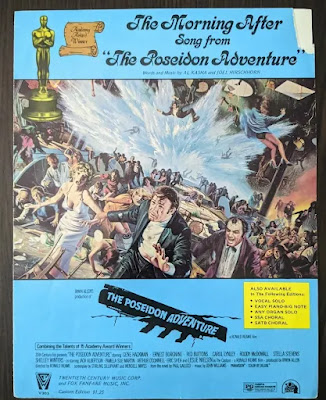


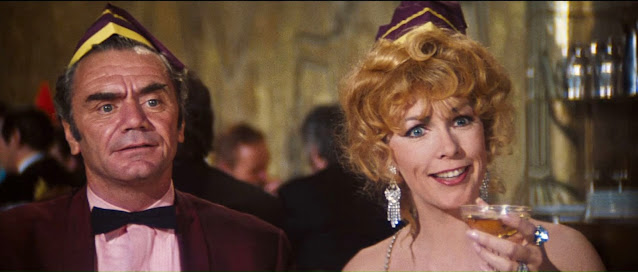


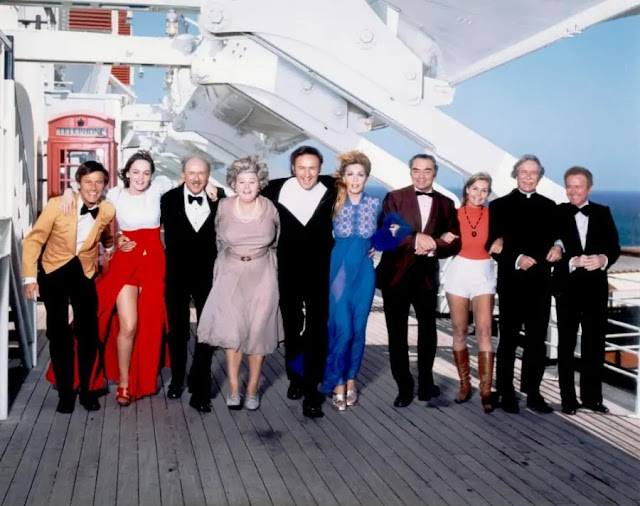
 |


The cast and crew maneuvered through flames, traversed ductwork and shafts, climbed inverted ladders and staircases, navigated twisted metal, and waded through abundant pools of water as they documented their trek toward the hull, the sole section of Poseidon still visible above the surface.


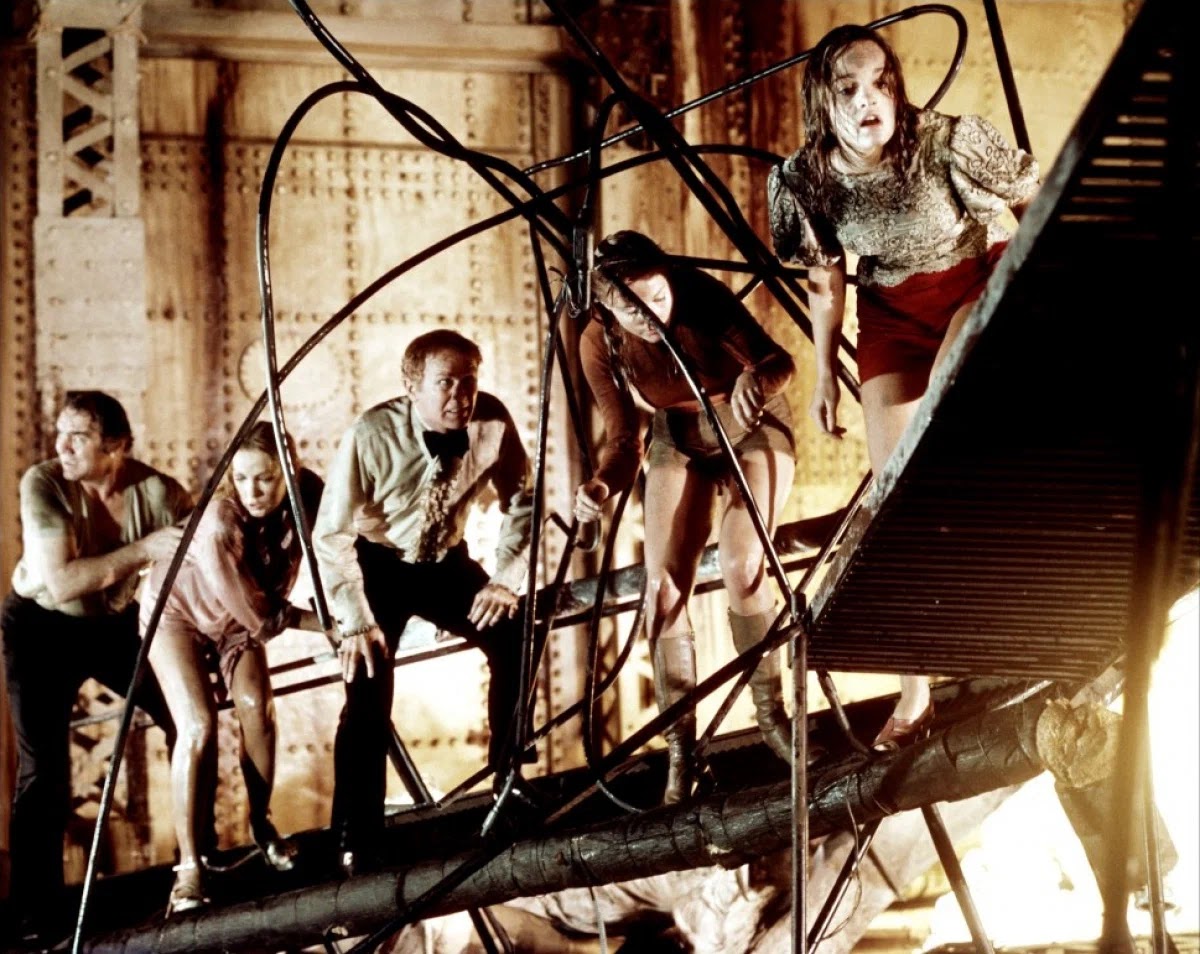


Director Ronald Neame filmed in chronological order, allowing the characters’ increasingly soiled faces, battered bodies, and ragged clothing to mirror the actors' real-life challenges. The film has always captivated my attention from start to finish. It's a rare gem in the world of disaster films, one that truly stands the test of time. Despite its imperfections, I can see why it's still an entertaining film. From over-the-top acting, the funny lines, and the sermons amid a visually thrilling experience that is both frightening and emotionally impactful.

The movie was a huge hit, and second grossing film of that year making over $125 million globally. It was up for eight Academy Awards and managed to snag two Oscars (Song and Visual Effects), a Golden Globe, a British Academy Film Award, and a Motion Picture Sound Editors Award.

Cool facts:
- Esther Williams was initially offered the role that eventually went to Shelley Winters, as her swimming abilities made her a natural fit for the part. However, her husband Fernando Lamas, who had a strong influence over her career decisions, did not want her to appear on screen in a less-than-flattering way. Esther was disappointed that she did not end up making the film.
- Many took on their own stunts and began to push themselves to outperform each other including the two-time Oscar winner Winters, who, at 51, added 35 pounds to authentically portray a former swimming champion swimmer and grandmother. She was never able to lose the weight after that. Actor Ernest Borgnine shared that there was a palpable sense of eagerness before they embarked on executing the daring stunts.

- The passenger (Ernie Orsatti) who fell into a ceiling light fixture after the luxury liner was overturned by a tidal wave was paid $100 for the stunt and go it in one take. This led to him becoming a stuntman and coordinator.

- This was based on a novel by Paul Gallico from 1969. Gallico, started his career writing for magazines like The Saturday Evening Post in the 1930s and '40s. He got some of his story ideas from a tale shared by a crew member on the Queen Mary, which almost flipped over due to a massive rogue wave during its time as a troop ship in World War II. Interestingly, the film's opening scenes were filmed on the Queen Mary right after it was turned into a floating hotel in Long Beach, California.
- Red Buttons and Carol Lynley had a strong dislike for each other while shooting. They avoided any interaction outside of their scenes together. Interestingly, despite this tension, they eventually formed a close friendship in the years that followed.
- Married couple aboard the ship Ernest Borgnine and Shelley Winters ended up playing a married couple on an episode of The Love Boat in 1982.


Academy Award winner Gene Hackman cuts cake on set of his new film, The Poseidon Adventure,
at 20th Century Fox. Other members of cast who previously had won
Oscars join in celebration. From left are Jack Albertson, Red Buttons,
Ronald Neame (director), Hackman, Shelley Winters and Ernest Borgnine.
Hackman won an Oscar for role as a tough detective in The French Connection.


Subscribe to:
Posts (Atom)