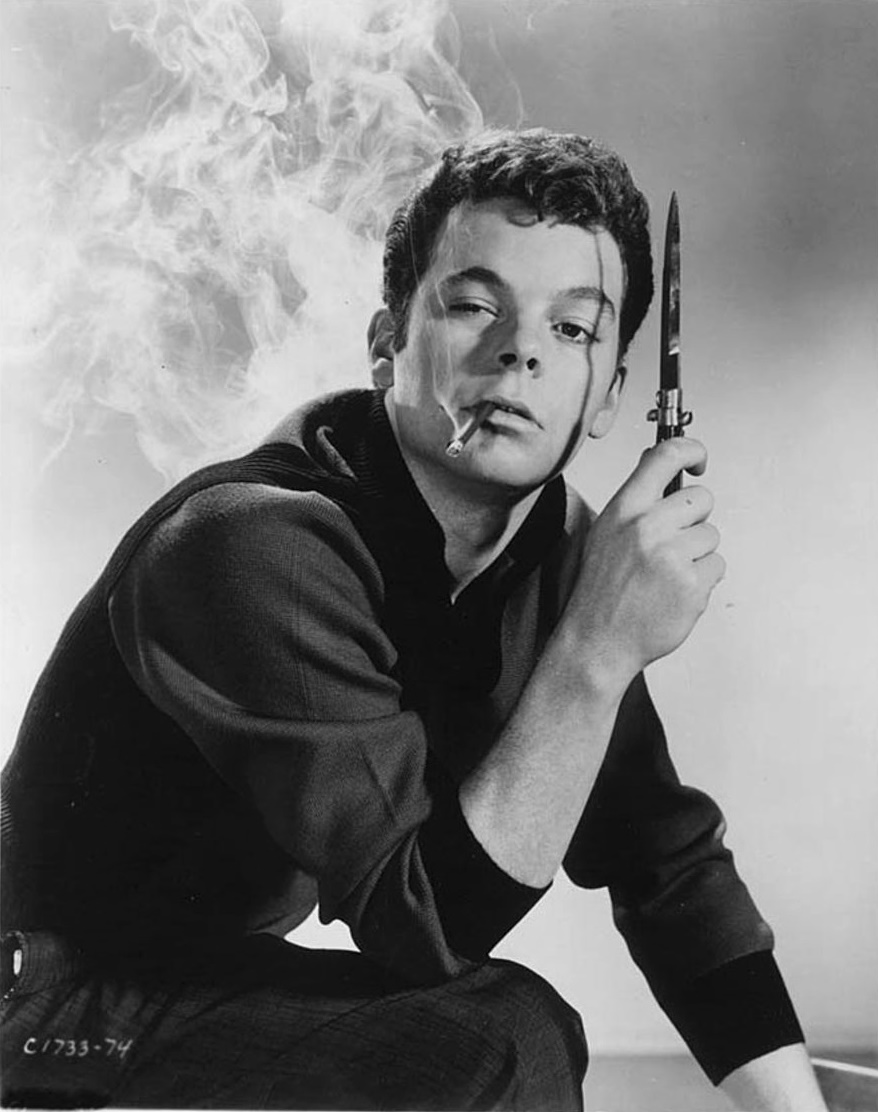
🌟Classic Off-Screen Quotes: Robert Mitchum


 "I never take any notice of reviews - unless a critic has thought up some new way of describing me. That old one about my lizard eyes and anteater nose and the way I sleep my way through pictures is so hackneyed now." - Robert Mitchum

🌟Classic Off-Screen Quotes: Greta Garbo


   (Caricature Artwork by me. On watercolor paper, Derwent pencils)    
 

"My talents fall within definite limitations. I am not as versatile an actress as some think. I have made enough faces"

🫶Love Nostalgia- Olivia de Havilland & James Stewart


In December 1939, both Olivia de Havilland and Jimmy Stewart were traveling to New York City. Olivia was going to attend the city premiere of 'Gone With The Wind' at the Astor Theatre, while Jimmy was planning a Christmas visit to his sister. Coincidentally, Irene Mayer Selznick, who was a significant figure in the entertainment industry, proposed to Jimmy's agent, Leland Hayward, that Jimmy accompany Olivia to her high-profile event. This suggestion piqued Jimmy's interest, as he had met Olivia briefly in Hollywood and jumped at the opportunity to further acquaint himself with her.
 
“Jimmy met me at LaGuardia airport,” Olivia recalled to James Fishgall, author of Pieces of Time: The Life of James Stewart. “He even had the limousine drive out to the airfield. We were both quite shy and ventured one word at a time in our conversation.” 


The kind of conversation they had must have been rather compelling. In no time, they became extremely close, spending almost every evening dining together, and frequently attending the most recent Broadway plays. Being a certified pilot, Jimmy used to enjoy taking Olivia for fly-overs across the Pacific, he even taught her a few flying lessons. Alongside this, they enjoyed engaging with his model aircraft, having picnics in the forest (bringing along a portable record player), and occasionally, they would settle by the lounge, engross with a book each, falling into relaxation in the end. The closeness between them was so palpable that as of spring 1940, fan magazines were hinting about a possible elopement. 


Despite the Hollywood glamour encompassing their lives, Jimmy and Olivia were more invested in world affairs, their perspective stretching far beyond the trivial contrivances of the showbiz industry. With the looming Nazi menace burgeoning atrociously, England, the birthplace of Olivia's parents and where her father still resided, was somewhat isolated in its resistance against the Third Reich. This was a time when other countries across Europe started to crumble.
 
In August 1940, as the production of The Philadelphia Story concluded, Stewart took the initiative to organize a fundraiser to aid Britain's strained forces. This event took place at the Sam Houston Coliseum in Texas, where Olivia, Tyrone Power, Mischa Auer, and Jimmy's former roommate and close associate Henry Fonda took center stage. Fonda partnered with Jimmy for a magic stint, complementing Jimmy's accordion tunes with his cornet.


March 1941 saw Jimmy join the army, nine months before Pearl Harbor was bombed. Despite efforts to maintain their relationship, distance took its toll, leading to their eventual parting. Olivia, in the subsequent year, initiated a relationship with John Huston, who directed her in 'In This Our Life.' Huston and Errol Flynn, according to reports, had a conflict over Olivia, marking the official end of their romance. 


Throughout their one and a half year relationship, Jimmy, known for dating numerous Hollywood celebrities, did propose. However, Olivia, despite being eight years his junior, questioned his maturity level.


“I think his offer of marriage was just a frivolous thing on his part,” she said years later. “Jimmy wasn’t ready for a wife—I guess he still had a few more wild oats to sow.”
 
“I think they got closer to the altar than was known at the time,” Jimmy’s friend, former MGM publicist Jerry Asher, recalled in Lawrence Quirk’s James Stewart: Behind the Scenes of a Wonderful Life. “But they ‘scaredy-catted’ out of it. They were a lot alike, Livvy and Jim. Prim, well brought up, decent, considerate, but as romantic and sexy as any guy or gal around.”
 
But both later said they wished they’d made a film together. In 1950, Jimmy was the one who handed over the Best Actress Oscar to Olivia for her stellar performance in "The Heiress".


🎥Review: High School Confidential! (1958)


"Honey, get your boppin' shoes, Before the jukebox blow the fuse, Everybody's hoppin', Everybody's boppin', Boppin' at the high school hop."

Before Johnny Depp took on the role of an undercover cop in a high school in TV's 21 Jump Street, Russ Tamblyn from West Side Story made the first wave in the cult classic B-film High School Confidential! (1958). He plays a new student at Santa Bellow High, but he’s an undercover narcotics agent working with the police to take down “Mr. A,” a jazz pianist and drug dealer played by Jackie Coogan, who is famously known as Uncle Fester.


 The film starts with Jerry Lee Lewis belting out the title track from a flatbed truck. 


We also meet Tony Baker, a cocky, smart-mouthed punk who transfers to the school, eager to create some chaos and score some weed. Right away, he's causing a stir with his shocking behavior and delightfully 1950s slang that leaves everyone bewildered. 


  "The name's Baker. B-A-K-E-R, and I park where I want."           


Shocking the office clerk played by Helen Kleeb.

"You know, if you were 20 years younger, even then, I'd hate to be stuck with you on a date.'

 
He carries on his performance alongside his no-nonsense yet sympathetic teacher, Arlene Williams (Jan Sterling). Initially frustrated with him, she gradually begins to soften up to him.
 

 "You know for a 'teach' you're pretty cool. Why don't we cut out and go to your pad and live it up, huh?" 
 
She's not amused.  "If you're trying to create an impression, I'm unimpressed."


While Mrs. Williams walks Tony back to the principal's office, we’re treated to a groovy history lesson about Christopher Columbus from J.I. the slick and tough leader of  the Wheelers and Dealers  (John Drew Barrymore), the son of John Barrymore and father of Drew.

"Now, one swingin' day while Chris was sittin' at the beach, goofin', he dug that the world was round. And with this crazy idea stashed in his lid, he swung over to the royal pad to cut up a few touches with a cool chick, Queen Isabella, who was a swinger."

Michael Landon, fresh off his role in I Was a Teenage Werewolf (1957), takes on the character of Steve Bentley, the captain of the football team, The Rangers, who makes his introduction to Baker.
 Steve: "Hi, I'm Steve Bentley. Tony "That's too bad."


He’s living with Gwen Dulaine, a sultry sex kitten (Mamie Van Doren), who’s pretending to be his aunt and guardian while her husband is away. She’s constantly seeking his attention and makes secret attempts to seduce him.


“Relatives should always kiss each other hello and goodbye. Polite-like.”


 "If you flake around with the weed, you'll end up using the harder stuff".


So believes the police commissioner In a gathering with the principal and teachers.  He displays marijuana cigarettes and explains the slang associated with them (“Let’s turn on!”), stressing the harmful nature of drugs. They are convinced that marijuana is the gateway to a slippery slope that can lead to serious addiction issues.

Baker gets close to J.I. and finds out that the school has Mary Jany  users.


"I'm lookin' to graze on some grass.

He shows interest in J.I.'s girlfriend, Joan, (Diane Jergens) who also smokes without her parents knowing.
"The only problem children I know are the ones that have problem parents, which leaves us out. Cheers, darling."
 
While trying to buy weed, Tony learns that J.I. is looking to connect with the secretive Mr. A. Tony wants to meet Mr. A. to score a kilo of heroin. Joan, Arlene, and Gwen are threatened by drug dealers, and when Tony's cover is blown,  this leads to Baker and the football team versus the drug leaders in an action-filled ending.


The 1950s were a time of unease, with worries about communism, nuclear war, and space exploration hanging over society. This widespread anxiety even extended to how young people were viewed by their elders. The U.S. Senate, caught up in this atmosphere of fear, launched an investigation into the growing issue of juvenile delinquency. Albert Zugsmith, a producer known for a variety of films ranging from the Sex Kittens Go to College (1960) to the more sophisticated Written on the Wind (1956) and Touch of Evil (1958), made a big move from Universal to MGM during this volatile period. Director Jack Arnold, famous for his work on The Creature from the Black Lagoon and It Came from Outer Space, had recently teamed up with Zugsmith on the classic The Incredible Shrinking Man (1957). Confidential may seem like just another rock ‘n’ roll rebel film in the vein of Blackboard Jungle, but it’s based on the true story of Texas Joe Foster, an undercover narcotics agent whose adventures in Texas high schools made headlines in 1951. Screenwriter Robert Blees (Magnificent Obsession) was captivated by this tale and infused the script along with Lewis Meltzer (Autumn Leaves) with the energetic slang of the beat generation.


I had so much fun watching this movie, especially since it shares my birthday, June 13. As a big fan of 1950s exploitation teen films, I can’t believe I didn’t discover this hidden gem sooner. It’s delightfully cheesy and wonderfully captures the spirit of the era. The slang alone is worth the viewing experience, not to mention the thrilling fight scene, lively pool party, jalopy drag race, and the Coogan hangout with beatnik poetry performance by Phillipa Fallon. 

On my B-Movie-o meter, it scores a average B.

"Tomorrow is dragsville, cats. Tomorrow is a king-sized drag. Hula fast shorts, swing with a gassy chick, turn on to a thousand joys, smile on what happened, then check what's gonna happen, you'll miss what's happening. Turn your eyes inside and dig the vacuum. Tomorrow, drag."


I was a bit puzzled about Van Doren's role, but it's probably best not to dig too deep into Mamie Van Doren's character and simply enjoy her performance. Let's just say she knows how to set the screen on fire. The character of Tony Baker presents a significant flaw for me; he makes his ulterior motives glaringly obvious. His approach is far too intense. I'm more critical of Tamblyn's casting in this part. In West Side Story, he convincingly embodied the Jets' leader, radiating charisma and authority. Yet, in this film, I couldn't shake the feeling that another actor could have delivered a more compelling presence. Adding to the annoyance is his portrayal of an irritating punk. It seems Tamblyn wasn't fully engaged, perhaps feeling trapped in a B movie after his recent Academy Award nomination for Peyton Place. He was puzzled by High School Confidential's cult following, dismissing it as a trivial film, and he felt Peyton Place deserved more acclaim. Both he and Van Doren were left scratching their heads about the nature of their scenes together.
 

 Tamblyn: "To tell you the truth, I hated it at the time. My agent and I both thought the script was terrible, and he tried to get me out of it, but the studio threatened suspension if I didn't do the picture... And no one has ever figured out what Mamie Doren's character was. She's my aunt? It was weird."


Doren: It was my first movie with MGM. I met the leading man Russ Tamblyn, I met him the same morning I had a kissing scene with him. It's not easy to walk into a scene early in the morning just from bed and you walk in and you've got this very passionate sexy scene with your nephew. Supposedly he was my nephew in the movie. I don't know who was looking at the movie and let that go by."

The film went through several title changes. "Crazy Mixed-Up Kids," "The Texas Joe Foster," "Teen-Age Project," "Co-Ed Jungle," "Juvenile Jungle," and, finally, "High School Confidential!"
When the film first hit the screens, it didn't receive a warm welcome from everyone. Critics were quick to pounce on the use of slang, with some outright rejecting it as a poorly crafted effort. Despite the mixed reviews, this black-and-white CinemaScope feature turned out to be a box office sensation, raking in close to $2 million from a modest budget of around $6,000. The film's success was significantly bolstered by the record-breaking popularity of its title track, performed by Jerry Lee Lewis.


 In 1963, the film was rebranded as The Young Hellions, and by 1965, it was a familiar sight on local television across the United States. The mid-1970s saw it become a midnight movie classic on 42nd Street in New York City and at the Nuart Theater in Los Angeles. The 1980s brought its release on videotape, and in 2004,  was released on DVD.