Rosalind Russell faced significant challenges in her pursuit of the role of Norma Shearer's chatty socialite relative Sylvia Fowler in 1939's All female cast comedy The Women (1939). She endured five screen tests under the scrutiny of director
George Cukor, who ultimately deemed her unsuitable for the part. In a
bold move, she approached Irving Thalberg, MGM's production chief, to
make a personal case for herself. During the filming, she even sustained
some cuts and bruises from a staged fight with Paulette Goddard.
 |
Russell and Paulette Goddard between takes
|
Initially uncertain about how to embody Sylvia, she began with a serious
and intense interpretation. However, after a discussion with Cukor, he
encouraged her to adopt a more playful tone:
"Don't be the heavy in this piece. You must be a woman who makes trouble but you must do it with humor. Otherwise, when you break up the marriage with a child involved, you are a real villainess. Don't do that. You'll throw this thing off-balance. I want you to do it the exaggerated way you did it in the test"
Rosalind infused such vibrant enthusiasm, physical comedy and humor that it's my favorite performance in the film. Once she observed the positive reception of
the daily rushes during the production of The Women, Rosalind opted to
take a brief "sick leave" for five weeks until she secured shared credit
alongside Norma Shearer and Joan Crawford. This was necessary because
Shearer, being Thalberg's wife and the film's leading lady, had a
contract that prohibited any other woman from receiving credit alongside
her. Ultimately, she agreed to the arrangement.
"There
had been signs and potents...I never attempted it again in my whole
career. The Women brought me acceptance as a comedienne, and also
brought me my husband."
The
gentleman in question was Frederick Brisson, a Danish theatrical agent
who first saw her while watching her performance in The Women aboard a
ship crossing the Atlantic. The moment he laid eyes on Russell, he thought to himself, “I’m going to marry that woman.”
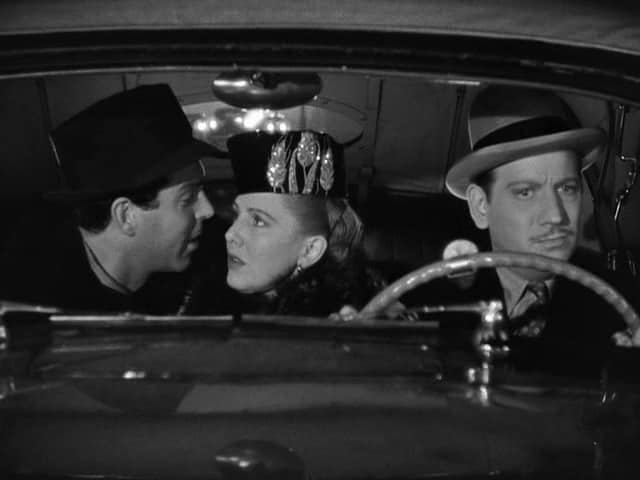
He expressed his desire to meet her to his friend Cary Grant, who was busy filming “His Girl Friday” with Russell at the time. Grant facilitated their introduction on set, and within a year, Brisson and Russell were married, with Grant serving as the best man. Brisson earned the moniker “The Wizard of Ros” due to his significant impact on her career throughout their joyful and prosperous thirty-five years of marriage.At
the wrap party was seen dancing with Cukor when director Ernst Lubitsch
jokingly suggested she dance with Norma Shearer for more close-ups in
the picture. Taking the suggestion in good fun, Russell immediately took
Shearer's hand and playfully danced her across the floor with a wink.


.jpg)
.jpg)
.jpg)
.jpg)
.jpg)
.jpg)

.jpg)
.jpg)
.jpg)
.jpg)


%20-%20YouTube%20-%20www.youtube.com.png)
