"Lights, Camera, Blog Action: Joining the Classic Movie Blog Association!"

I am happy to announced that I've been accepted into the prestigious Classic Movie Blog Association!

 
Since 2009, the CMBA has led the blogging industry in supporting its members with their love of classic movies and blogathons - all created with classic cinema blogging standards and recognizing excellence within the community of classic film blogging as well. During their organization's "official" monthly blog, they feature a different member, and this month - it's yours truly! I'm excited to share some fun and interesting facts about myself. I’ll share my reasons behind my blogging adventure, and reveal the passions that fuel my creativity. Plus, I'll recommend seven fabulous films that would make for a wonderful day of programming on Turner Classic Movies  It's a fantastic community of bloggers, and I'm excited and honored to now be a part of it! Check it out below!


😱DISAS-TOBER! 🎥 REVIEW: The Poseidon Adventure (1972)

Get ready to face a different kind of scare this October - disaster films!

Many people find themselves feeling a bit uneasy when it comes to disaster movies, and it's understandable why. These films can be quite brutal, often touching on themes of mass death. But at the same time, there's something strangely captivating about them, much like horror movies. While there may be some cliched messages tucked away in there, the way the stories unfold can be pretty wild and unpredictable, particularly when it comes to the fates of the characters. In the end, these movies usually morph into simple adventure tales about regular folks just trying to survive in the face of overwhelming adversity. So let's get started with a film I try to watch every New Year's Day. 


"There's got to be a morning after"...

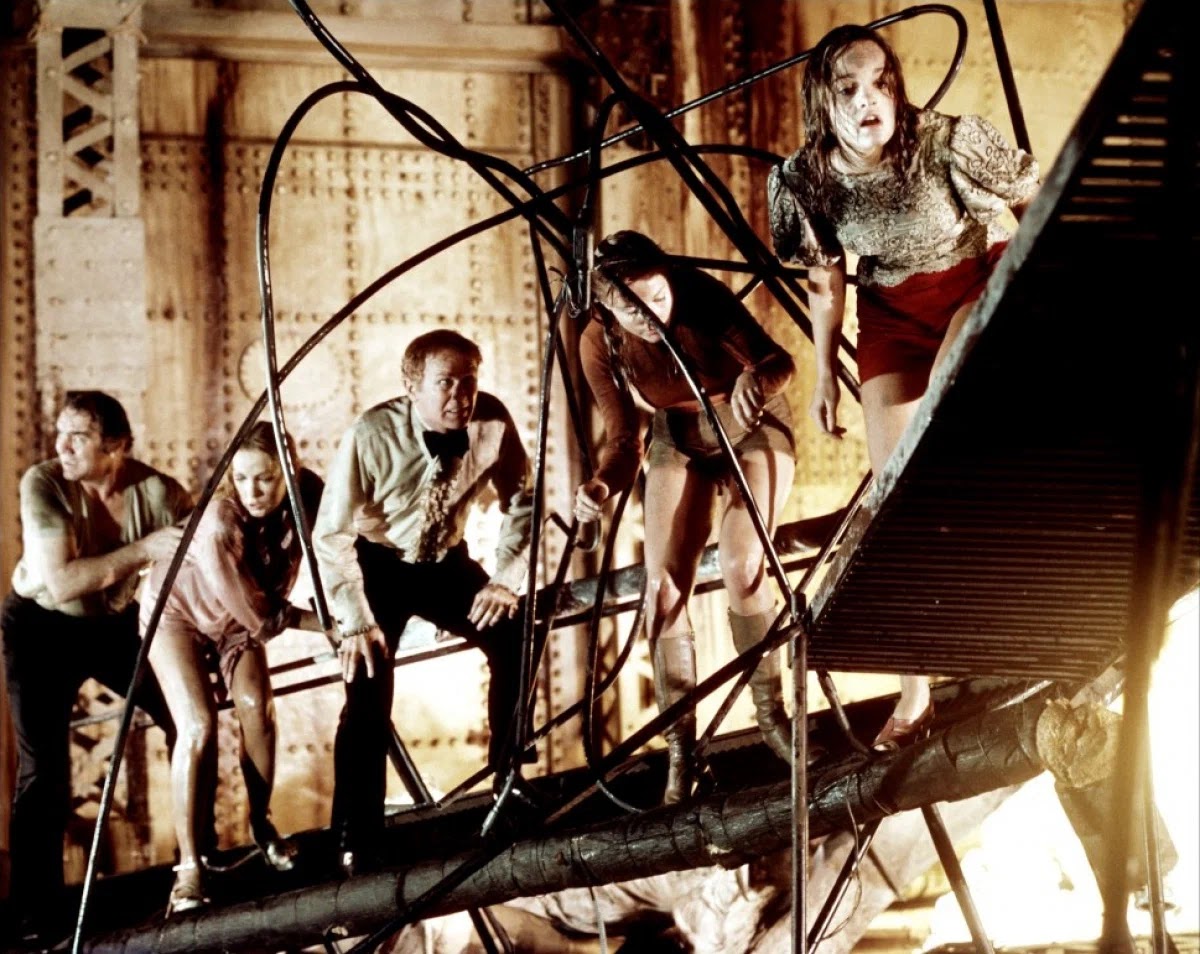
Attention passengers and crew of the SS Poseidon! Imagine yourself on the brink of a disaster, trapped inside an overturned luxury liner, with only a small group of survivors led by a preacher standing between you and safety. This is the harrowing situation on the SS Poseidon as it embarks on its final voyage from New York City to Athens before being scrapped. But as fate would have it, a tsunami strikes on New Year's Day, leaving you upside down and fighting for survival.


Now is the time to come together, follow the guidance of this preacher, and make a united effort to find a way out of this dire situation. Your lives depend on your ability to work as a team, to trust in the leadership of this preacher, and to never lose hope.


Get ready for the ultimate disaster movie adventure brought to you by 20th Century Fox and the legendary Master of Disaster, Irwin Allen! Featuring an all-star cast including five Oscar winners (Gene Hackman, Ernest Borgnine, Shelley Winters, Jack Albertson, and Red Buttons) head the cast, along with a mix of familiar faces (Stella Stevens, Leslie Nielsen, Carol Lynley, Arthur O’Connell, and Roddy McDowall) and young newcomers (Pamela Sue Martin and Eric Shea). 


The cast and crew maneuvered through flames, traversed ductwork and shafts, climbed inverted ladders and staircases, navigated twisted metal, and waded through abundant pools of water as they documented their trek toward the hull, the sole section of Poseidon still visible above the surface. 


Director Ronald Neame filmed in chronological order, allowing the characters’ increasingly soiled faces, battered bodies, and ragged clothing to mirror the actors' real-life challenges. The film has always captivated my attention from start to finish. It's a rare gem in the world of disaster films, one that truly stands the test of time. Despite its imperfections, I can see why it's still an entertaining film. From over-the-top acting, the funny lines, and the sermons amid a visually thrilling experience that is both frightening and emotionally impactful.


The movie was a huge hit, and second grossing film of that year making over $125 million globally. It was up for eight Academy Awards and managed to snag two Oscars (Song and Visual Effects), a Golden Globe, a British Academy Film Award, and a Motion Picture Sound Editors Award.


Cool facts:
  • Esther Williams was initially offered the role that eventually went to Shelley Winters, as her swimming abilities made her a natural fit for the part. However, her husband Fernando Lamas, who had a strong influence over her career decisions, did not want her to appear on screen in a less-than-flattering way. Esther was disappointed that she did not end up making the film.
 
  • Many took on their own stunts and began to push themselves to outperform each other including the two-time Oscar winner Winters, who, at 51, added 35 pounds to authentically portray a former swimming champion swimmer and grandmother. She was never able to lose the weight after that. Actor Ernest Borgnine shared that there was a palpable sense of eagerness before they embarked on executing the daring stunts.
 
  • The passenger (Ernie Orsatti) who fell into a ceiling light fixture after the luxury liner was overturned by a tidal wave was paid $100 for the stunt and go it in one take. This led to him becoming a stuntman and coordinator. 
 

  • This was based on a novel by Paul Gallico from 1969. Gallico, started his career writing for magazines like The Saturday Evening Post in the 1930s and '40s. He got some of his story ideas from a tale shared by a crew member on the Queen Mary, which almost flipped over due to a massive rogue wave during its time as a troop ship in World War II. Interestingly, the film's opening scenes were filmed on the Queen Mary right after it was turned into a floating hotel in Long Beach, California.
 
  • Red Buttons and Carol Lynley had a strong dislike for each other while shooting. They avoided any interaction outside of their scenes together. Interestingly, despite this tension, they eventually formed a close friendship in the years that followed.
 
  • Married couple aboard the ship Ernest Borgnine and Shelley Winters ended up playing a married couple on an episode of The Love Boat in 1982. 


Los Angeles Times Photographic Collection at the UCLA Library.  
 
 
Academy Award winner Gene Hackman cuts cake on set of his new film, The Poseidon Adventure, at 20th Century Fox. Other members of cast who previously had won Oscars join in celebration. From left are Jack Albertson, Red Buttons, Ronald Neame (director), Hackman, Shelley Winters and Ernest Borgnine. Hackman won an Oscar for role as a tough detective in The French Connection.


Luna Awakens!

Before the iconic figures of Vampira, Elvira, and Morticia Addams, there was Luna. Carroll Borland is best known for portraying Luna, the daughter of Bela Lugosi's character, Count Mora, in Mark of the Vampire (1935).  But her legacy goes beyond just this role - she is also credited with creating the iconic look of the female vampire with her waist-length dark hair and Adrian-designed shroud in this film.

Two years ago, I was inspired to create my interpretation of her. It was a fun experience to replicate her spooky look!


Carroll Borland was an American actress born on February 25, 1914. She started her career in Hollywood, working in various films and stage productions. She retired from acting in 1953 and passed away in 1994 due to complications from pneumonia. She is most widely remembered and beloved for her iconic role as Luna Mora.


Borland's as Luna in Mark of the Vampire has become iconic in classic horror films. Her delicate yet menacing demeanor and striking appearance have influenced countless other actresses in the horror genre. The decision to have her character wear a long, flowing shroud designed by Hollywood costume designer Adrian added to the overall impact of her performance.


She paved the way for other females in horror film and her influence has lasted for decades, solidifying her as an icon in the horror genre.


🎥 Review: Lonesome (1928)

 “In the whirlpool of modern life — The most difficult thing is to live alone”


Today is Silent Film Day, and I'm excited to share my new favorite silent film with you!


Describing my newfound love for the movie Lonesome (1928) by Hungarian-American director Paul Fejos, I can't help but use simple, charming, lovely, exquisite, and romantically sublime words. This film really knows how to nail the feeling of love at first sight, it had me totally swooning.The story takes place on July 3 in NYC, where two lonely souls living in boardinghouse rooms navigate their daily lives in the bustling city. 


He toils as a machinist while she's a telephone switchboard operator, both yearning for something more than their mundane routines. 

As the holiday weekend approaches, they find themselves grappling with how to spend their time when their plans fall through. Upon hearing a live band promoting that evening's carnival,

 “There’s nothing like the hurly-burly of a carnival to help recover from the stress of daily routine.”
, they both independently decide that Coney Island is the perfect getaway to break free from their daily grind.

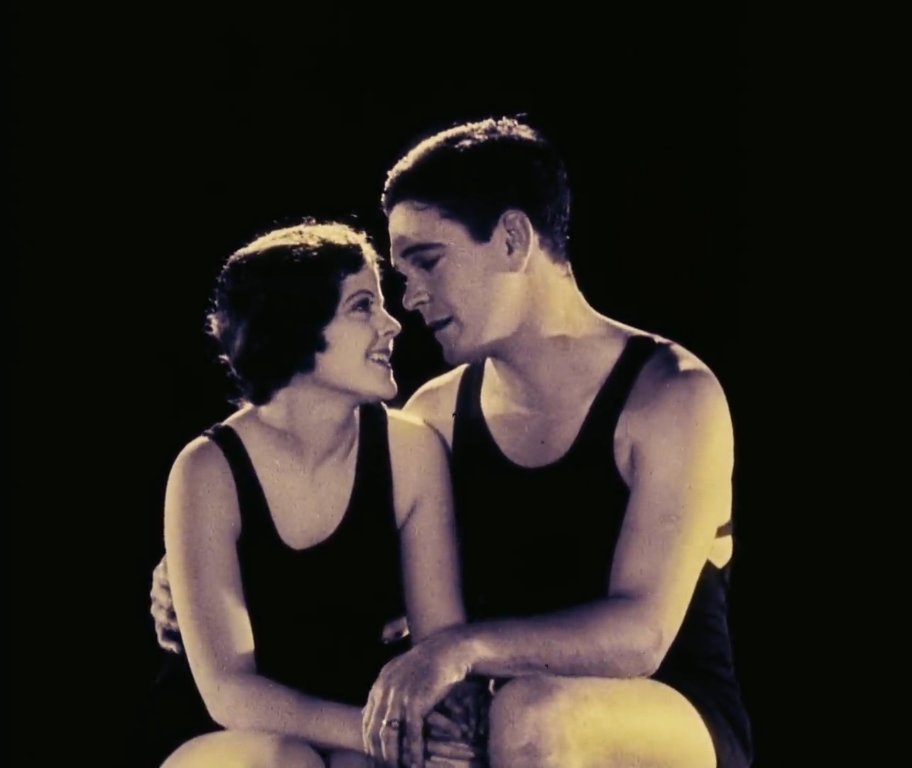
On their journey, they unexpectedly cross paths, and Jim (Glenn Tryon) is immediately captivated by Mary (Barbara Kent). After winning her affection, they enjoy a day filled with rides, games, and blossoming romance at the beach. 


"I see riches, travel, pretty clothes and marriage with a dark handsome young man- he'll make you happy miss."

However, a roller coaster accident separates them, and without knowing each other's last names or addresses, they are left heartbroken and desperate to reunite. Lonesome captures the intense longing of these two lovers as they search for one another amidst the bustling crowds of Coney Island. Will they find each other again? 


Barbara Kent shines on screen with her infectious smile, showcasing honest vulnerability in her performance. Meanwhile, Glenn Tryon adds a comedic touch as an ordinary man afraid of missing out on his chance at happiness. Together, they create a dynamic and engaging on-screen duo.


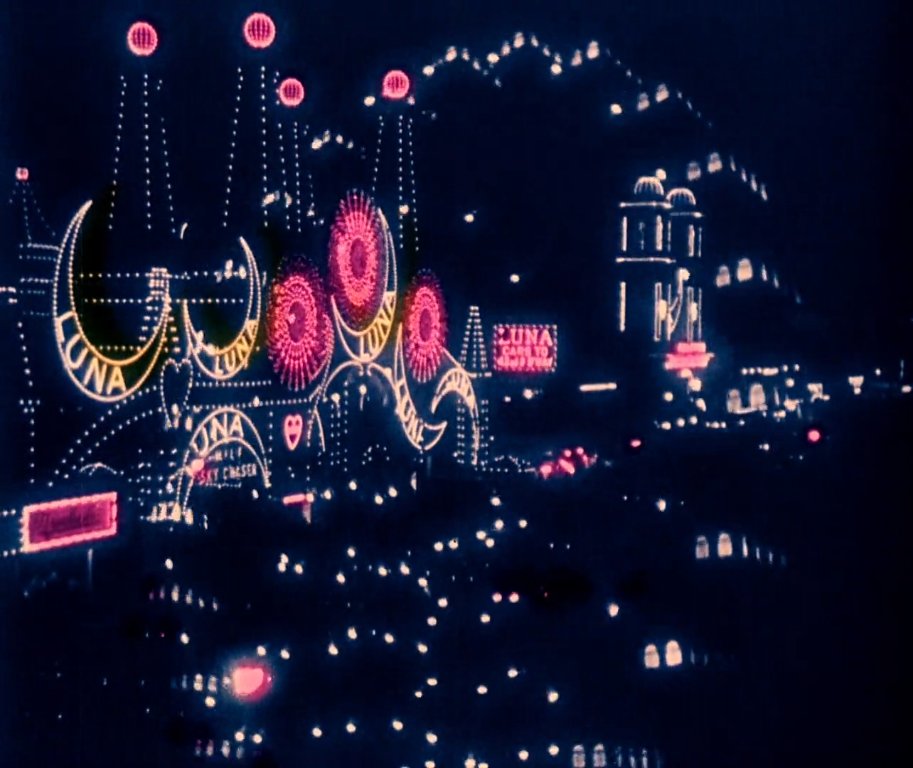
From the vibrant color-tinted shots at the beach and dance hall, to the creative edits like a Roman numeral clock overlaying job scenes, every frame is a work of art. This early "part-talkie" film seamlessly transitions between silent intertitles and audible dialogue, keeping you engaged throughout. 

Director Fejos's attention to detail, from hand-tinted sequences to long camera takes, brings the characters' lives to vivid life. The film boasts stunning cinematography that features a dazzling array of techniques, including superimposition effects, innovative editing, dynamic camera movements, and exhilarating roller-coaster shots. It employs fast motion, extended one-shot scenes, split screens, intricate model work, mesmerizing double-and triple-exposures, breathtaking matte paintings, as well as both hand-held and dolly shots. 

Initially conceived by the studio as a short film with a three-page outline, Lonesome was transformed into a feature-length production by Fejös. The studio insisted on adding three dialogue scenes to the film that Fejos did not originally direct. These scenes had simple dialogue and a stationary camera, all in the name of attracting more viewers. Plus, the sound design prominently featured Irving Berlin's "Always."

It was released mainly in a sound version. The silent version was mostly shown in theaters that hadn't switched to sound yet, like those in rural areas that couldn't afford the upgrade. Some original prints of the film have scenes colored with purple stencils. When it was ready for a wider release, Lonesome included a synchronized soundtrack featuring music, sound effects, and three dialogue scenes. The studio marketed the film as a sound production.

In 2010, it was selected for preservation in the United States National Film Registry by the Library of Congress as being "culturally, historically, or aesthetically significant".The film was released on Blu-ray disc and DVD on August 28, 2012, as part of the Criterion Collection.

Fejos who was also an explorer, screenwriter, anthropologist, and doctor created a film that left me in awe. I couldn't help but be captivated by the beauty of love found and creativity of this visually stunning film.